Apple
Malus domestica
Almost every apple needs a different apple nearby, flowering at the same time, to set a crop.
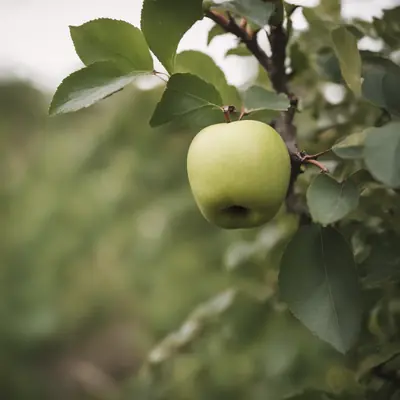
Two varieties with overlapping bloom
Most apples are self-incompatible and need pollen from a different variety flowering at the same time. Nurseries publish bloom groups - pick two from the same or adjacent groups. Some popular varieties (Jonagold, Mutsu, Gravenstein, Winesap) are triploid, produce sterile pollen, and need two other varieties nearby to pollinate each other as well as the triploid. A crabapple in the vicinity pollinates almost everything and takes little space.
Rootstock decides the tree, not the variety
The variety determines the fruit; the rootstock determines size, precocity and anchorage. M27 and B9 are very dwarfing, fruit in three years, stay under eight feet and need permanent staking for life. M26 and M7 are semi-dwarf at ten to fifteen feet. Seedling and MM111 make full-size trees that take seven years to fruit and need a ladder forever. For a home garden semi-dwarf is usually the sweet spot.
Site and soil
Full sun and, critically, good air drainage - avoid frost pockets at the bottom of slopes, where spring frosts kill blossom. Well-drained soil; apples hate wet feet. A slight slope is ideal.
Training and pruning
Prune in late winter while dormant. Establish a central leader or modified central leader with well-spaced scaffold branches. Each year remove dead, damaged and crossing wood, water sprouts (vertical whips) and suckers from the rootstock, then thin to open the canopy so light and air reach the interior. Apples fruit on spurs that live for years - learn to recognise them and do not cut them off.
Thin the fruitlets in June
In late spring, thin clusters to one fruit every six to eight inches. It feels brutal and it is the single biggest improvement most people can make. It gives larger, better-coloured fruit, prevents limb breakage, and - crucially - prevents biennial bearing, where a heavy year is followed by nothing. Many trees drop some fruit naturally in "June drop"; thin after that.
Pests
Codling moth is the classic worm in the apple; pheromone traps monitor it and kaolin clay or bagging individual fruit gives good organic control. Apple maggot causes dimpled, tunnelled fruit - red sphere traps work well. Plum curculio leaves a crescent-shaped scar on young fruit in spring. Aphids curl new growth; borers attack stressed trunks.
Diseases
Apple scab is the most common here - olive-brown blotches on leaves and corky lesions on fruit in wet springs. Cedar apple rust needs junipers nearby and causes bright orange leaf spots. Fire blight blackens shoots into a shepherd's crook, especially after warm wet bloom. The realistic answer for a home orchard is to plant resistant varieties (Liberty, Enterprise, Freedom, Williams Pride) rather than committing to a spray schedule, and to rake up and remove fallen leaves each autumn.
Harvest
Ripeness varies by variety - use the days-from-bloom figure for your variety, plus background colour changing from green to yellow-green, seeds turning brown, and fruit lifting off easily when tilted upward rather than pulled. Taste is the final test.
Storage
Late-season varieties store far better than early ones. Keep at 32-35F and high humidity; good keepers last three to six months. Store apples away from other produce - they release ethylene, which will sprout potatoes and over-ripen everything nearby.
- Hardiness
- Zone 4-8
- First fruit
- Year 3-5 on dwarf
- Spacing
- 8-20 ft by rootstock
- Sun
- Full, 8 hrs+
- pH
- 6.0-7.0
- Pollination
- Needs a partner
- Chill hours
- 500-1000
- Life
- 30-50 yrs