Asparagus
Asparagus officinalis
Three years of patience buys twenty years of harvest.
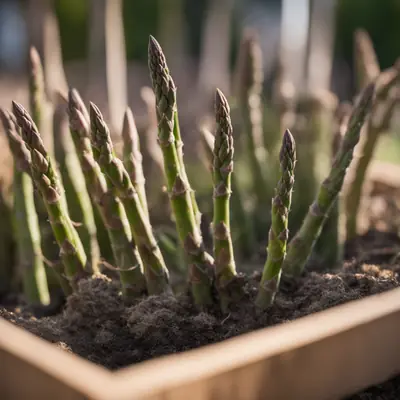
Site it once and site it properly
This bed will be there for two decades. Choose a spot you will never want to dig or rototill, at the edge of the garden where it will not be disturbed. Get every scrap of perennial weed - especially bindweed and quackgrass - out before planting, because you will never be able to dig them out afterwards.
Planting crowns
Buy one-year-old crowns; two-year crowns cost more and rarely establish better. Dig a trench six to eight inches deep, mound soil along the bottom, drape the roots over the mounds twelve to eighteen inches apart, and cover with two inches of soil. Fill the trench gradually as the shoots grow through the season.
Do not pick for two years
Cutting spears in years one and two starves the crown and permanently reduces the bed for its entire life. Year three, take a short two-week season. Year four onward, harvest for six to eight weeks. This is the hardest discipline in vegetable growing and the one that most determines long-term yield.
Stop cutting at the right moment
When the emerging spears thin to pencil width, stop harvesting and let everything grow. The resulting ferns photosynthesise all summer and build next year's crop. Cutting into that reserve is borrowing against future harvests.
Male and female plants
Female plants put energy into red berries and seed, and self-sow seedlings that crowd the bed. All-male hybrids like the Jersey series yield noticeably more and do not seed around. If you have an older mixed bed, pulling the females is worthwhile.
Feeding and weeding
Feed in early spring before spears emerge and again after the harvest ends. Asparagus tolerates high pH better than most crops and appreciates lime on acidic soil. Weeding is the main ongoing task - mulch heavily, and hand-weed rather than hoeing deeply, which damages the crowns.
Pests
Asparagus beetle is the main one - blue-black with cream spots, with grey larvae that feed on the ferns. Hand-pick and knock the larvae off; keeping the ferns healthy matters because they feed next year. Cut down and remove dead ferns in late winter, before spears emerge, to destroy overwintering beetles.
Harvest and storage
Snap or cut spears at ground level when they are six to nine inches tall and the tips are still tight. During peak season in warm weather you may need to cut daily. Spears lose sugar quickly - stand them upright in an inch of water in the fridge and use within a few days, or blanch and freeze.
- First harvest
- Year 3
- Productive life
- 15-20+ yrs
- Spacing
- 12-18 in
- Row spacing
- 4-5 ft
- Sun
- Full
- pH
- 6.5-7.5
- Plant
- Crowns, early spring
- Harvest window
- 6-8 wks (mature)
We sell this one.
See it in the shop