Basil
Ocimum basilicum
Pinch the flower buds off and one plant will keep going all summer.
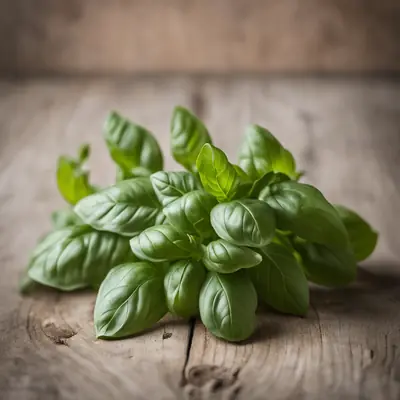
Warmth is everything
Basil is genuinely tropical. Below about 50F the leaves blacken and the plant sulks; below 40F it dies. Do not set it out with your lettuce - wait until nights are reliably above 55F, well after last frost. Cold-damaged basil rarely recovers well.
Pinch constantly
Once basil flowers, leaf production slows sharply and the flavour turns harsh and slightly bitter. Pinch out the growing tip above a pair of leaves every couple of weeks from when the plant is six inches tall. This both prevents flowering and forces branching, turning one stem into a bush. Harvesting and pinching are the same operation.
Harvest correctly
Cut whole stems back to just above a leaf pair, taking the top third of the plant, rather than picking individual leaves from the bottom. The plant then branches from that point. Never strip it bare - leave at least two-thirds of the foliage.
Soil and feeding
Rich, well-drained soil and moderate feeding. Too much nitrogen produces large soft leaves with noticeably diluted flavour and oil content, which is why commercially grown basil often tastes of little.
Water in the morning
Steady moisture, but water the soil and do it early so foliage dries quickly. Wet leaves overnight invite downy mildew, and basil is very susceptible.
Downy mildew is the main threat
Yellowing between the veins on upper leaf surfaces with grey-purple fuzz underneath, spreading fast in humid weather and capable of destroying a planting in a week or two. It arrives on wind-blown spores most summers. Resistant varieties (Prospera, Amazel, Rutgers Devotion) now exist and are genuinely worth seeking out. Otherwise: airflow, morning watering, and successive sowings so you always have young plants coming.
Other problems
Fusarium wilt causes sudden one-sided wilting and brown streaking in the stem - buy certified clean seed and rotate. Japanese beetles and slugs chew leaves. Aphids cluster on tips.
Succession sowing
Because of mildew and because plants tire, sow a fresh batch every four to six weeks through the season. Basil also roots readily from cuttings in water in about a week, which is the fastest way to replace a failing plant.
Storage and preserving
Do not refrigerate - cold blackens the leaves. Stand cut stems in water on the counter like flowers. Basil dries poorly, losing most of its aroma; freezing works far better, either chopped in oil in ice cube trays or as finished pesto, which freezes excellently.
- Days to harvest
- 50-70
- Spacing
- 10-12 in
- Sun
- Full
- pH
- 6.0-7.0
- Soil temp
- 65F+
- Frost
- Killed by any
- Water
- Steady, morning
- Life
- Annual