Taproot Solutions LLC

Where passion for nature meets the precision of science.

A working greenhouse and a working lab. We grow rare, heirloom and exotic plants, then press, distill and bottle what the harvest becomes.

Beyond the greenhouse

Artisanal spice blends

Hand-selected and balanced from herbs and peppers grown here, so the blend is built around what actually peaked that season.

Pure essential oils

Extraction methods chosen to respect the plant's chemistry, by someone who did this in industry before doing it here.

Tissue culture

Clean, true-to-type starts of the varieties that are difficult or slow to propagate any other way.

Where we ship

United States

Everything in the catalog ships anywhere in the US. Seeds ship free; everything else is priced by packed weight at checkout, plus a flat handling fee.

Canada

Canadian orders are seeds only. Most of our seed varieties are cleared for export and ship at international package rates; everything else in the catalog is US-only. Canadian orders are charged in USD; any duties are collected on delivery.

Annual seed subscription

Never miss a planting season

Each year we curate a seasonal selection of our seeds, including the rarest and most exotic varieties, and ship it to your door.

Ask about a spot
Rooted in science, driven by wisdom

We would rather explain it than sell it.

Our team is backed by multiple advanced degrees in biology and chemistry. That foundation is what lets us read what a plant is actually doing at the cellular level instead of guessing at it.

But science shouldn't stay in the lab. Whether you are a commercial grower, a home gardener with one struggling exotic, or just curious, send the question. We answer it either way.

Ask the lab
Also from Taproot Solutions

We build mobile apps and games too.

The same two hands that run the greenhouse write software. Browse the apps and games we have published, or get in touch about development work.

Visit the development site
Catalog

Everything we grow, and everything we turn it into.

Sold direct from the greenhouse. If something is out of season it will say so rather than quietly disappear.

Loading the catalog…

← All guides
Tomatoes

Beefsteak Tomato

Solanum lycopersicum

The biggest, latest and fussiest tomato. Everything that goes wrong with tomatoes goes wrong here first.
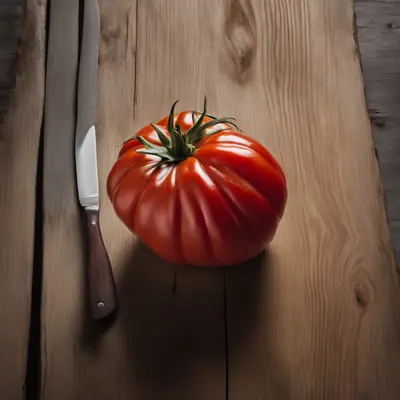
Beefsteak Tomato

Always indeterminate, always big

Beefsteaks - Brandywine, Big Beef, Mortgage Lifter, Cherokee Purple - grow to eight feet or more and need the entire season. Start them indoors six to eight weeks before last frost and plan for a first ripe fruit in late July at the earliest.

Heat stops fruit set

Above roughly 90F daytime or 75F night, pollen becomes sterile and flowers drop without setting. Large-fruited types are the worst affected, which is why you often get an early crop, then a mid-August gap, then a second flush in September. Shade cloth during heatwaves and consistent moisture reduce but do not eliminate this.

Prune to one or two leaders

This is the type where pruning genuinely pays. Remove suckers (the shoots in the leaf axils) below the first flower cluster and keep one or two main stems. You get fewer but much larger fruit, better airflow, and earlier ripening - all of which matter for a variety that is racing the season.

Serious support

A fruit can weigh two pounds. Use a heavy stake, a Florida weave, or string trellising tied to an overhead wire. Standard cages bend. Tie loosely with soft ties every foot as the plant grows.

Blossom end rot

A sunken leathery black patch on the bottom of the fruit. It is a calcium delivery failure caused by irregular watering, not usually a soil calcium shortage - adding calcium to soil that already has plenty does nothing. The fix is even moisture: deep watering on a schedule and a thick mulch. Beefsteaks and paste types are the most susceptible. Affected fruit can be trimmed and used.

Cracking, catfacing and zippering

Concentric or radial cracks come from a sudden water surge after dry weather. Catfacing - puckered, scarred, malformed blossom ends - comes from cold weather during flower formation, and heirlooms are prone to it. Both are cosmetic.

Feed and water like a heavy crop

Compost at planting, then a potassium-leaning feed every two to three weeks after first set. An inch and a half to two inches of water a week, at the base, never overhead.

Diseases

Early blight and septoria arrive every year in this climate; strip lower leaves, mulch, and space widely. Late blight is rarer but destroys plants in days. Fusarium and verticillium wilt cause sudden one-sided collapse - buy VFN-resistant varieties where you can, and note that many of the best heirlooms have no resistance at all, which is part of the trade.

Harvest

Pick at the breaker stage - when the blossom end first shows colour - and finish indoors, or leave on the vine for maximum flavour and accept more cracking and pest damage. Vine-ripened is better; breaker-stage is safer. A tomato picked at breaker develops full flavour off the plant, contrary to common belief.

Storage

Never refrigerate. On the counter, stem down, out of direct sun, for up to a week. Beefsteaks do not can as well as paste types because of the water content, but they freeze whole - the skins slip off under running water when thawed.

At a glanceTomatoes
Habit
Indeterminate
Days to harvest
75-95
Fruit size
10-32 oz
Spacing
30-36 in
Support
Heavy stake or string
Sun
Full
pH
6.2-6.8
Sets poorly above
90F day / 75F night
Taproot Solutions LLC

A working greenhouse, a working lab, and a compiler.

We grow rare, heirloom and exotic plants along the Mississippi River, turn what the season gives us into spice blends, oils and preserves, and write the software we wanted for keeping track of all of it.

Who we are

A small operation that does its own work

Taproot Solutions is a Mississippi River valley outfit built around one stubborn idea: that the person who grows the plant, the person who runs the extraction, and the person who writes the software should be close enough to talk to each other. In our case they are close enough to be the same two hands.

That is unusual and we are not pretending otherwise. It means we ship less than a company ten times the size. It also means nothing here has been outsourced to somebody who has never met the crop. The germination figures on a seed packet are from our own tests, the growing guides are written from our own beds, and when you email about a plant the reply comes from the person who grew it.

We sell direct. There is no middleman between the bed and your door, which is the only reason the prices work at our scale.

The garden

Zone 6b/7, and everything here has been grown to maturity in it

The beds and the greenhouse sit in the river valley, which is a genuinely awkward place to grow things: humid summers that breed every fungal disease in the book, soil that runs neutral to alkaline, and a spring that will hand you a hard frost a fortnight after it convinced you it was over.

We grow through it rather than around it. That is why the catalogue leans on varieties with real disease resistance, why our tomato and pepper advice is blunt about heat, and why the “Zone tested” line on a product page means something specific: that variety has been carried from seed to harvest here, not just listed from a supplier's sheet.

The range runs from the ordinary to the genuinely strange: radishes, cucumbers and peppers alongside superhots, mulberries, aquatics and tissue-cultured rarities. If it is not native and it can naturalise, we say so on the product page rather than letting you find out later.

The lab

Rooted in science, driven by wisdom

Our team is backed by multiple advanced degrees in biology and chemistry. That foundation is what lets us read what a plant is actually doing at the cellular level rather than guessing at it. That matters most with the rare and exotic crops that do not follow the advice on the back of a seed packet.

The same background is why we do tissue culture and extraction in-house instead of buying them in. Tissue culture gets you a plant that is genetically identical to its parent and carries none of the virus load the parent picked up over the years, which is the only sensible way to propagate some of what we grow. Extraction methods are chosen to suit each plant's chemistry rather than running everything through the same still.

It is also why we sell the inputs. The media, gelling agents, growth regulators and amendments in the Lab & Growing department are the ones we use in our own vessels and beds, not a dropshipped catalogue we have never opened.

GardenLife

The app we wrote because the notebook never survived June

Every gardener starts a notebook. Almost nobody keeps one past June. GardenLife is our answer to that. It does the remembering for you: what you planted, where you planted it, what ate it, what you picked, and what is still sitting in the pantry.

It came directly out of running this place. Every feature in it exists because we needed it first and could not find it anywhere else.

  • Garden logEvery plant by crop, variety, planting date and bed, with photos and harvests logged as you pick them.
  • Bed plannerSquare-foot grid you tap to plant, with companion planting checked as you go and every square named like a spreadsheet cell, so “B4” still means something in July.
  • Pests and problemsPhotograph a sick leaf or an unfamiliar bug for a likely condition, a confidence level and organic treatment steps, then log the incident and close it out.
  • Seeds and pantrySeed inventory with brand, year and viability, a planting calendar that knows your zone, and a way to turn a harvest glut into next year's seed stock.
  • Care remindersWatering, feeding and pruning by frequency, with a notification when they are due.
  • Foraging mapPins and drawn areas for mushrooms, berries, herbs and trees, public land boundaries, sunrise and sunset, and GPX export.
  • Ask your gardenA chat assistant that has read your own records, so the answers are about your garden and not a generic one.
  • Offline firstEverything works with no signal and syncs when you are back. Export the lot as JSON whenever you like.

On identification we are deliberately conservative: an ID is a starting point, never a verdict. GardenLife asks you to confirm spore prints, lookalikes and a positive identification before it will save a collected find, and it will never tell you something is safe to eat. Verify with an expert. Always.

The app is free and ad-supported, with a paid tier that removes the ads. We would rather it earn its keep that way than put the useful parts behind a wall.

Software

We build mobile apps and games too

The same two hands that run the greenhouse write software, and it is not a sideline. It is the other half of the business. Everything is built and published in-house under Taproot Solutions: designed here, coded here, released here, and supported by the person who wrote it.

GardenLife is the one we point people at, and the one worth your time if you take anything from this site. It is the app we use in our own beds. The rest is a working catalogue of utilities and games at various stages of release, and it lives on the developer site rather than cluttering up a page about plants.

Our approach to software is the same as our approach to plants. We do not collect data we have no use for, we do not dark-pattern people into subscriptions, and anything a plant or a person could get hurt by gets a conservative answer rather than a confident one.

What to expect

The practical stuff about ordering from us: what we will and will not promise, and what happens when something goes wrong.

Living goods

Plants and starts are perishable and are shipped only when conditions allow. We hold living orders until night temperatures at the destination are reliably above 50°F rather than send something that will arrive dead. If that delays your order past what you can use, tell us and we will cancel it.

Seed germination

Germination rates quoted on a product page are our test figures for that lot, not a guarantee of your results. Germination depends on your soil temperature, moisture and timing, all of which are outside our control.

Growing advice

The growing guides are general horticultural advice for the named variety. They are offered in good faith and free of charge, and they are not a warranty of any particular outcome in your conditions.

Edible and consumable goods

Prepared goods are produced in-house in small batches. Check the label for allergens before you eat anything. Essential oils are sold for aromatic use; they are not medicines, and nothing on this site is a medical claim or a substitute for advice from a professional.

Planting responsibly

Some of what we sell is not native and can naturalise, and we say so on the product page where it applies. Please check your local restrictions before planting, and never release aquatic plants or pond water into a waterway or storm drain.

Orders and returns

If something arrives damaged, dead or wrong, get in touch with a photo within 48 hours of delivery and we will replace it or refund it. Living goods cannot be returned once they have been planted.

Taproot Solutions LLC · See also the terms of use, privacy policy and data deletion pages that cover our apps.

Taproot Solutions LLC

Ask us anything that grows.

Whether you are a commercial grower with a technical question, a home gardener with one struggling exotic, or just curious about why a plant does what it does, send it. We answer either way, and you do not have to be a customer.

Enquiry sheetTaproot Solutions LLC

Plain text. Photos can follow once we reply.

We read every one, usually within two working days.