Beet
Beta vulgaris
Each wrinkled seed is a cluster of several, so thinning is not optional.
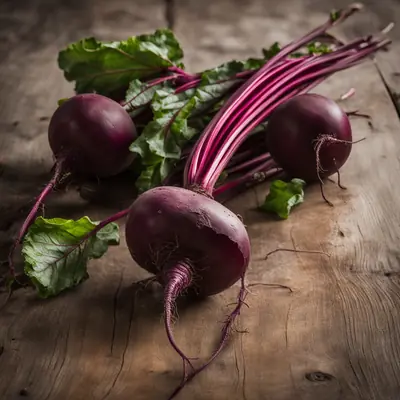
One seed, several plants
What you sow is not a seed but a dried fruit containing two to four seeds. They come up in a clump and must be thinned to a single plant, or you get a tangle of small deformed roots. Snip the extras at soil level with scissors rather than pulling, which disturbs the one you are keeping. Some varieties are sold as monogerm and avoid this.
Soak and sow
Soaking the seed clusters overnight speeds germination noticeably. Sow half an inch deep in cool soil; beets germinate reasonably in cold ground and are among the earlier crops you can start.
Thin twice
Thin first to one plant per cluster, then again to three or four inches apart once they are established. The second round of thinnings are baby beets with usable greens attached.
Greens count as a crop
Beet tops are excellent - better than chard to many tastes - and can be harvested lightly throughout without hurting the root. Take one or two outer leaves per plant at a time.
Boron deficiency
Black corky spots inside the root, sometimes with cracked skin, are boron deficiency. It is common in high-pH or sandy soil. A very dilute borax drench corrects it, but use minimal amounts on a soil test - boron is toxic in excess and the margin is narrow.
Steady water and pH
Beets want near-neutral soil and consistent moisture. Acid soil gives poor growth; drought gives woody, sometimes white-ringed roots. About an inch a week.
Pests
Leaf miners tunnel between the leaf surfaces leaving pale blotches - it damages the greens but not the roots, and row cover prevents it. Flea beetles pepper seedlings. Cercospora leaf spot causes small circular spots with purple margins in humid weather.
Harvest and storage
Best at one and a half to three inches. Larger beets get woody and develop tough rings, with the exception of storage varieties like Cylindra. Twist the tops off, leaving an inch of stem, and do not cut the taproot or they bleed. They keep three to five months in damp cold storage, and pickle and can extremely well.
- Days to harvest
- 50-70
- Spacing
- 3-4 in
- Row spacing
- 12-18 in
- Depth
- 1/2 in
- Sun
- Full
- pH
- 6.0-7.0
- Season
- Spring and fall
- Storage
- 3-5 months