Blackberry
Rubus fruticosus agg.
Thornless erect varieties have made this a civilised crop rather than a hedge you fight.
Erect, semi-erect or trailing
Erect thornless varieties (Navaho, Ouachita, Apache) are self-supporting and by far the easiest for a home garden. Semi-erect types are very productive but need a trellis. Trailing types (marionberry, boysenberry) need substantial support and are less hardy. Choose thornless unless you have a reason not to.
Same biennial cane logic as raspberries
Canes live two years - primocane growth, then floricane fruiting, then death. Cut out floricanes at the base immediately after harvest. Primocane-fruiting blackberries also now exist and can be mown down annually like autumn raspberries.
Tip the primocanes in summer
When first-year canes reach about waist height (36-42 inches for erect types), pinch out the growing tip. This forces lateral branching, and next year's fruit comes on those laterals - it can multiply your crop substantially. Then shorten those laterals to twelve to eighteen inches in late winter.
Soil and water
Well-drained, slightly acidic, with plenty of organic matter. Consistent water during fruit development makes a large difference to berry size; blackberries are drought-tolerant but produce small seedy fruit if dry.
Fully black is not ripe
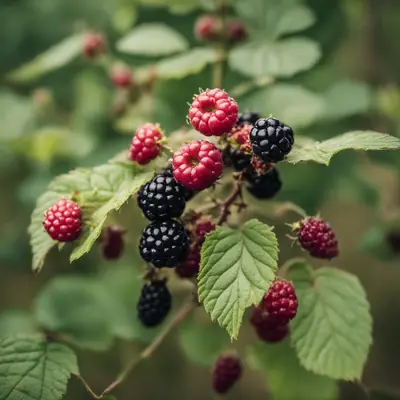
A blackberry turns fully black several days before it is actually ready. Wait until it loses its glossy shine, turns dull matte black, plumps up, and detaches with almost no pressure. Picked at the shiny stage they are tart and firm; picked dull they are sweet. This is the single most useful thing to know about blackberries.
Pests and disease
Spotted wing drosophila is the major current pest and blackberries are highly susceptible - pick every day or two, remove all overripe fruit, and chill immediately. Japanese beetles, cane borers and stink bugs also occur. Orange rust is systemic and incurable - plants show bright orange pustules on leaf undersides in spring and must be dug out and destroyed entirely.
They spread
Blackberries sucker and also tip-root where a trailing cane touches soil. Keep the row defined, mow around it, and remove escapees each year or the patch will expand indefinitely.
Harvest and storage
Pick into shallow containers - they crush easily. Two or three days refrigerated at best. They freeze extremely well and make outstanding jam, cobbler and cordial.
- Hardiness
- Zone 5-9
- First fruit
- Year 2
- Spacing
- 3-4 ft
- Row spacing
- 8 ft
- Sun
- Full
- pH
- 5.5-6.5
- Support
- Trellis for trailing
- Life
- 15+ yrs