Butternut Squash
Cucurbita moschata
The best keeper and the one squash the vine borer largely leaves alone.
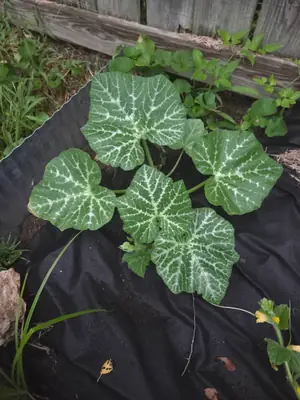
Borer resistance is the headline
Butternut is Cucurbita moschata, which has solid, dense stems rather than the hollow ones of pepo squash. Vine borers largely cannot establish in it. If squash vine borer has destroyed your zucchini and pumpkins year after year, butternut is the squash that will still be standing.
A long season and a lot of room
Ninety-five to a hundred and ten days, and vines running ten to fifteen feet. Sow direct after last frost in warm soil, or start in peat pots two to three weeks early. Trellising is possible with slings supporting the fruit and saves considerable space.
Rich soil, heavy feeding
Squash are among the hungriest garden crops. Work in generous compost or rotted manure, plant on a mound, and side-dress once vines start running. Consistent water through fruit development, then ease off as they mature.
Pollination
Female flowers have a small squash behind them. Poor bee activity gives fruit that starts and then shrivels. Hand-pollinate in the early morning if needed - one male flower will do several females.
Pests still to watch
Squash bugs and cucumber beetles still attack it, and cucumber beetles transmit bacterial wilt. Powdery mildew arrives midsummer but butternut usually holds on long enough to finish its fruit.
Know when it is ripe
The skin turns uniform deep tan with no green streaking, goes matte rather than glossy, and cannot be dented with a thumbnail. The stem becomes hard and corky. Harvest before a hard frost, which damages the flesh and ruins keeping quality.
Cut, never carry by the stem
Leave two to three inches of stem attached and cut it with secateurs. A squash with its stem broken off rots at that point within weeks - the stem is the seal. Never lift a squash by the stem.
Curing makes the difference
Cure at 80-85F in a dry airy place for ten days. This hardens the skin, heals surface wounds and converts starch to sugar - an uncured butternut is bland and stores poorly. Then store at 50-55F, dry, with air circulation and not touching each other.
Storage
Four to six months, and the flavour improves for the first month or two. It is the best-keeping common squash by a clear margin. Cooked purée freezes very well.
- Days to harvest
- 95-110
- Spacing
- 3-4 ft
- Row spacing
- 6-8 ft
- Sun
- Full
- pH
- 6.0-6.8
- Cure
- 10 days, 80-85F
- Storage
- 4-6 months
- Vine borer
- Resistant
We sell this one.
See it in the shop