Cabbage
Brassica oleracea var. capitata
Tough, productive, and prone to splitting the day after a heavy rain.
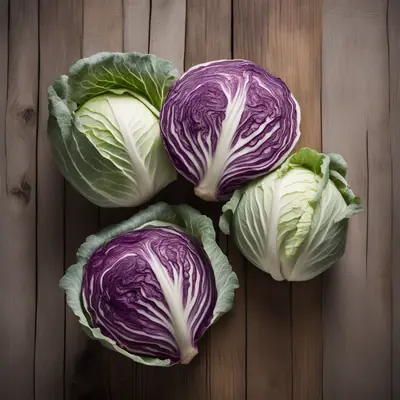
Spacing sets head size
A real decision rather than a detail. Twelve inches gives many small dense heads; eighteen to twenty-four gives fewer large ones. Decide before planting, because you cannot change it later. Small heads are usually more useful in a home kitchen.
Spring and fall crops
Both work here. Spring cabbage goes out as transplants three to four weeks before last frost and takes light frost easily. Fall cabbage is started in early summer, tastes sweeter and meets fewer pests. Overwintering types exist for very early spring cutting.
Firm soil, heavy feeding
Cabbages prefer ground that has settled rather than freshly fluffed - firm transplants in well. Side-dress with nitrogen three weeks after transplanting and again as heads begin to form.
Splitting
A mature head takes up water rapidly after rain and bursts. Once heads feel firm, either harvest promptly, ease off watering, or give the plant a quarter turn to snap some roots and slow uptake. Split heads are edible but will not store.
Pests
Cabbageworm and looper are constant - row cover or Bt handles both. Cabbage root maggot attacks spring transplants; a cardboard or felt collar at the stem base blocks egg-laying. Cabbage aphids and harlequin bugs show up in late summer and are worth hand-picking early before they multiply.
Diseases
Clubroot is the serious soil disease: swollen distorted roots, wilting in heat, and persistence for years in acid ground. Lime to pH 7.0 and rotate on four years. Black rot enters through leaf margins as V-shaped yellow lesions and spreads in wet weather; use hot-water-treated seed and stay out of the bed when foliage is wet.
Frost sweetens it
Cold converts starch to sugar. Cabbage cut after two or three light frosts is noticeably better than the same variety cut in September. Fall crops stand into December here under mulch.
Harvest
Cut when the head is firm to a squeeze, leaving outer wrapper leaves and the stalk in place. Many varieties then push several small secondary heads from the stump, which are worth having.
Storage and preserving
Dense late varieties keep two to four months just above freezing at high humidity - a cold garage or root cellar works. Cabbage is the classic fermenting vegetable: sauerkraut and kimchi are the traditional answer to a glut and keep for months.
- Days to harvest
- 60-100
- Start indoors
- 6-8 wks pre-frost
- Spacing
- 12-18 in
- Row spacing
- 24-30 in
- Sun
- Full
- pH
- 6.0-7.0
- Frost
- Improves flavour
- Storage
- 2-4 months