Carrot
Daucus carota subsp. sativus
Germination is the hard part. Everything after that is waiting.
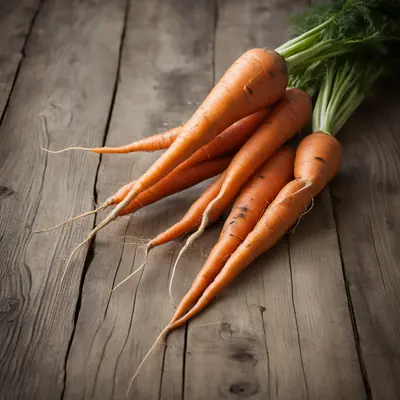
Keep the surface damp for three weeks
Carrot seed is tiny, shallow and slow, and the soil surface must not dry out at any point during the two to three weeks it takes to germinate. This is where most carrot crops fail. Cover the row with a board, damp burlap or a plank until the first seedlings show, checking daily, or water lightly twice a day in warm weather. Some growers sow a few radish seeds in the row as markers, since radishes come up in days.
Stones and clods make forks
Any obstruction splits the root. Carrots want deep, loose, stone-free soil worked to at least the length of the variety. On heavy or shallow ground, grow a short blunt type such as Chantenay rather than fighting it, or build a deep raised bed.
Do not use fresh manure
Fresh manure or heavy nitrogen causes forking and hairy roots with lots of top growth and little carrot. Grow carrots in ground manured for a previous crop.
Thin ruthlessly
Crowded carrots stay pencil-thin no matter how long you leave them. Thin to two inches even though it feels wasteful - do it in the evening and remove the thinnings from the area, because the crushed foliage smell attracts carrot rust fly.
Carrot rust fly
The main pest: the larvae tunnel through roots leaving rusty scarring. The adult flies low, so a two-foot barrier of insect mesh around the bed works, as does floating row cover from sowing. Sowing after early June avoids the first generation.
Green shoulders and splitting
Shoulders exposed to light turn green and bitter - hill a little soil or mulch over them as they size up. Splitting is caused by heavy watering after a dry spell, so water evenly, about an inch a week.
Harvest
Pull when they have reached the diameter the variety describes rather than waiting for maximum size, since oversized carrots go woody and split. Loosen with a fork in heavy soil. Frost improves the flavour considerably, so autumn carrots are worth waiting for.
Storage
Cut the tops off immediately or they will draw moisture from the root. They keep four to six months just above freezing at high humidity - in damp sand in a cold garage, or in perforated bags in the fridge. In zone 6b/7 they can also be left in the ground under a thick straw mulch and dug through winter.
- Days to harvest
- 60-80
- Spacing
- 2 in
- Row spacing
- 12-18 in
- Depth
- 1/4 in
- Sun
- Full
- pH
- 6.0-6.8
- Germination
- 14-21 days
- Storage
- 4-6 months