Cauliflower
Brassica oleracea var. botrytis
The fussiest brassica. Any check to growth and you get a head the size of a golf ball.
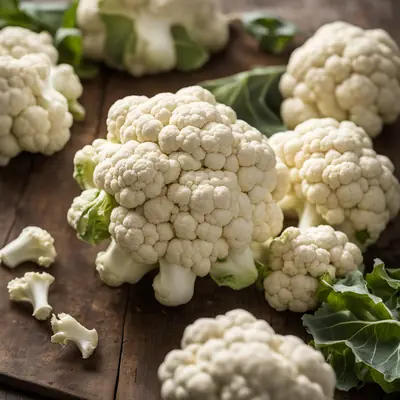
Never let it stall
This is the whole discipline. Any check - cold, drought, heat, a rootbound cell tray, transplant shock - causes buttoning, where the plant makes a tiny premature curd and stops. Unlike broccoli it does not recover and makes no side shoots. Steady water and steady feeding are not optional extras.
Fall crop, started carefully
Autumn is the reliable season here. Start seed in early to midsummer, pot on before roots circle, and transplant into moist well-prepared ground. Shade the transplants for a few days in high summer heat.
Rich soil, near-neutral pH
It wants more nitrogen and more room than broccoli and a pH nearer 6.5-7.0. Work in generous compost and side-dress at three weeks and again a month later. After buttoning, crowding is the commonest cause of small heads.
Blanching
Unless the variety is self-blanching, tie or clip the outer leaves over the curd when it reaches egg size. Sun turns a white curd yellow, coarse and slightly bitter. Check every couple of days once tied - curds can go from perfect to ricey quickly under wraps. Orange, purple and green varieties need no blanching, and purple types lose their colour when cooked.
Boron and molybdenum
Cauliflower is unusually sensitive to both. Boron deficiency causes hollow browned stems and bitter curds; molybdenum deficiency causes whiptail, where leaves narrow to straps. Both are more likely in acidic soil, so correcting pH often fixes them. Amend with borax only on a soil test - boron is toxic in excess.
Pests
The usual cast: cabbageworm, looper, diamondback moth, flea beetles, cabbage aphids, and cabbage root maggot on spring plantings. Row cover from transplant is the simplest answer since cauliflower needs no pollinators.
Harvest
Cut while the curd is tight, smooth and dense, leaving plenty of leaf attached to protect it. Once the surface separates into a grainy or ricey texture, quality is gone. Heads mature fast in warm weather, so check daily as they approach size.
Storage
Keeps a week or two in the fridge wrapped loosely. Freezes acceptably after blanching though the texture softens. It pickles very well, which is a good use for a glut that all matures at once.
- Days to harvest
- 55-100
- Start indoors
- 6-8 wks pre-frost
- Spacing
- 18-24 in
- Row spacing
- 30 in
- Sun
- Full
- pH
- 6.5-7.0
- Best season
- Fall
- Water
- Constant, 1.5 in/week