Cayenne
Capsicum annuum
Thin-walled and prolific, and the classic pepper for drying into flakes and powder.
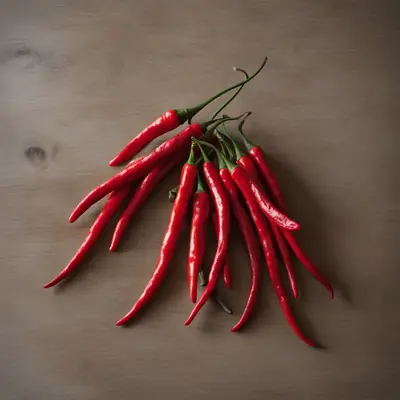
Bred for drying
Cayenne pods are long, slim and thin-walled with very little moisture, which means they air-dry on a string without moulding - something thick-walled peppers will not do. If you want your own chile flakes or powder, this is the variety.
Genuinely hot
At 30,000 to 50,000 Scoville, cayenne is several times a jalapeno and roughly double a serrano. Use accordingly, and grind dried pods outdoors or in a well-ventilated space - the airborne dust from grinding is fiercely irritating.
Extremely productive
One plant can carry fifty to a hundred pods over a season. A single cayenne plant supplies most households with dried chile for the year.
Standard pepper culture
Start indoors eight to ten weeks before last frost at 80-85F. Transplant once nights are above 55F. Space eighteen to twenty-four inches. Moderate nitrogen only, steady water, mulch.
Support
The plants are lanky and heavily loaded and will fall over. Stake or cage them.
Heat and water
Mild water stress late in the season increases capsaicin noticeably. Since the crop is destined for drying anyway, easing off water in the final weeks both concentrates heat and speeds drying.
Pests and disease
Aphids, corn borer, bacterial leaf spot, and sunscald on exposed pods. Rotate away from tomatoes, potatoes and eggplant on a three-year cycle.
Drying and storage
Pick fully red. String whole pods through the stems and hang somewhere warm, dry and airy for two to four weeks until brittle, or use a dehydrator at 125F. Store whole and grind as needed - ground chile loses aroma within months, whole pods keep a year or more. Wear gloves and avoid touching your face.
- Heat
- 30,000-50,000 SHU
- Days to harvest
- 70-90
- Spacing
- 18-24 in
- Height
- 24-36 in
- Sun
- Full
- pH
- 6.0-6.8
- Pod
- Slim, 4-6 in
- Best use
- Drying