Celery
Apium graveolens
A bog plant pretending to be a garden vegetable. Any dry spell shows up as stringiness.
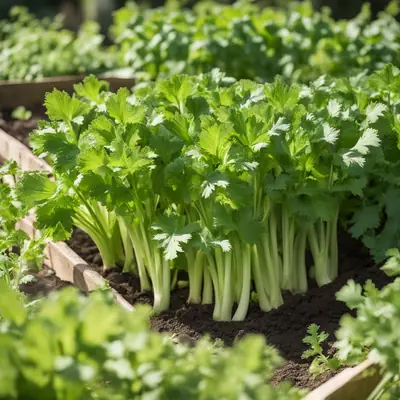
Water is everything
Celery evolved in marshes and wants consistently damp, rich soil throughout its long season. Any drought check produces stringy, bitter, hollow stalks, and it cannot be corrected later. If you cannot commit to watering it, grow something else.
Start early, germinate carefully
Sow indoors ten to twelve weeks before last frost. Seed is tiny and needs light - press onto the surface and do not cover. Keep at 70-75F and consistently moist; germination takes two to three weeks. Soaking seed overnight helps.
Do not plant out too early
Celery transplanted into cold soil below about 55F for an extended period responds by bolting later in the season. Wait until the weather has genuinely settled, two weeks or so after last frost.
Rich soil and heavy feeding
Work in as much compost or rotted manure as you can spare, and side-dress with nitrogen every three to four weeks. Celery is one of the hungriest and thirstiest things in the garden.
Blanching
Wrapping the stalks in cardboard or newspaper, hilling soil around them, or planting close together for self-shading, for the last two to three weeks lightens the colour and mellows the flavour. Self-blanching varieties reduce the need. Blanched celery is milder but slightly less nutritious.
Home celery is different
Expect darker, thinner, much more intensely flavoured stalks than the supermarket product, which is a blanched, heavily irrigated, specific commercial type. Home-grown celery is often better for cooking than for eating raw.
Pests and disorders
Celery leaf miner blotches foliage; row cover prevents it. Slugs shelter in the crowns. Blackheart - dead blackened growth at the centre - is a calcium delivery problem caused by irregular water, not a soil calcium shortage. Early and late blight cause leaf spotting in wet weather.
Harvest and storage
Take outer stalks individually as needed over several weeks, or cut the whole head at the base. It tolerates light frost and improves slightly. Keeps two weeks or more in the fridge wrapped tightly; limp stalks revive in cold water. The leaves are strongly flavoured and excellent dried for stock.
- Days to harvest
- 100-130
- Start indoors
- 10-12 wks pre-frost
- Spacing
- 8-10 in
- Row spacing
- 18-24 in
- Sun
- Full to part
- pH
- 6.0-7.0
- Water
- Constant, never dry
- Difficulty
- High