Chantenay Carrot
Daucus carota subsp. sativus
Short, fat and blunt. The carrot to grow if your soil is heavy, shallow or full of stones.
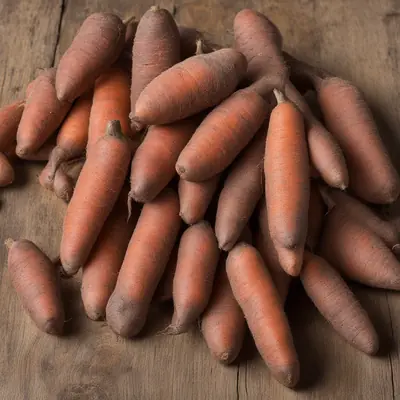
The answer to bad soil
Most carrot failures are soil failures - clay, stones or a hardpan a few inches down, all of which produce forked stubs. Chantenay is only four to five inches long and broad at the shoulder, so it can make a proper root where a long variety cannot. If you have heavy ground, grow this rather than fighting it or building a deep bed.
Also good in containers
The short root suits pots, window boxes and shallow raised beds. A twelve-inch-deep container grows Chantenay well.
Give it slightly more width
Because the shoulder is broad, thin to two and a half or three inches rather than the usual two, or the roots crowd each other into flat sides.
Germination
Same slow two to three weeks as any carrot, with the surface kept constantly damp. Cover the row with a board or burlap until seedlings show.
Flavour and texture
Chantenay has a larger, more distinct core and a slightly coarser, less sweet flesh than Nantes. It is a cooking and storage carrot rather than a raw-snacking one - it holds up well in stews and roasts where a brittle Nantes disintegrates.
Pick them on the small side
Chantenay goes woody and the core turns pithy if left to grow too large. Harvest at one and a half to two inches across rather than waiting for maximum size.
Pests and problems
Carrot rust fly, as with all carrots - insect mesh or row cover. Green shoulders from exposure; the broad shoulder means this happens more readily, so hill soil or mulch over the crowns.
Harvest and storage
Twist the tops off immediately. Four to six months in damp cold storage, and one of the better keepers. Frost improves the flavour considerably.
- Days to harvest
- 65-75
- Root
- 4-5 in, broad-shouldered, stumpy
- Spacing
- 2-3 in
- Soil
- Clay and shallow soil OK
- pH
- 6.0-6.8
- Core
- Larger, distinct
- Storage
- 4-6 months
- Best for
- Difficult soil