Cherry
Prunus avium / cerasus
Sour cherries are self-fertile, hardy and reliable. Sweet cherries are none of those things.
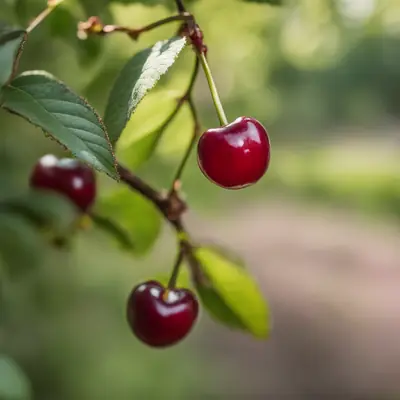
Grow sour cherries here
Sour or pie cherries (Prunus cerasus - Montmorency, Morello) are self-fertile, smaller, hardier, later-blooming, more disease-tolerant and far more forgiving. Sweet cherries (P. avium) need a compatible pollination partner, grow into large trees, bloom early, and crack badly in our summer rain. For a zone 6b/7 home garden, sour cherries are simply the better bet, and they make superb pies and preserves.
Rain cracking
Sweet cherries absorb water through the skin when rain falls on ripening fruit, and they split. There is no practical fix short of a rain cover over the tree, which is why commercial sweet cherries come from dry climates. Sour cherries crack much less.
Sweet cherry pollination
If you do grow sweet cherries, check compatibility carefully - some pairs are cross-incompatible even though both are fertile. Self-fertile varieties (Stella, Lapins, BlackGold) avoid the problem entirely and are the sensible choice for a single tree.
Birds will take everything
This is not an exaggeration - birds strip a cherry tree the day before you plan to pick. Netting over the whole tree is the only reliable answer, which is a strong argument for keeping trees small enough to net. Dwarfing rootstocks make this practical.
Pruning
Sweet cherries fruit on long-lived spurs and need light pruning only - remove crossing and crowded wood in late winter or, better in wet climates, in summer to reduce silver leaf and bacterial canker. Sour cherries fruit largely on one-year wood and need somewhat more renewal pruning.
Diseases
Black knot affects cherries as well as plums - cut out knots well below the swelling. Bacterial canker causes sunken oozing lesions and dieback, worse on stressed or winter-damaged trees. Cherry leaf spot defoliates trees by midsummer if unmanaged; rake and remove fallen leaves. Brown rot affects ripening fruit in humid weather.
Pests
Cherry fruit fly lays in ripening fruit, producing maggots - yellow sticky traps monitor it and prompt harvest limits damage. Plum curculio and aphids also occur; black cherry aphid curls new growth badly.
Harvest and storage
Pick with stems attached for better keeping, taking care not to tear the spur, which will fruit again next year. Cherries do not ripen after picking, so taste before committing. They keep about a week refrigerated, freeze very well pitted, and sour cherries can and preserve beautifully.
- Hardiness
- Zone 4-7
- First fruit
- Year 3-5
- Spacing
- 15-25 ft
- Sun
- Full
- pH
- 6.0-7.0
- Pollination
- Sour self-fertile
- Sweet cherry
- Cracks in rain
- Netting
- Essential