Collards
Brassica oleracea var. viridis
Kale that tolerates heat. The most forgiving brassica you can grow here.
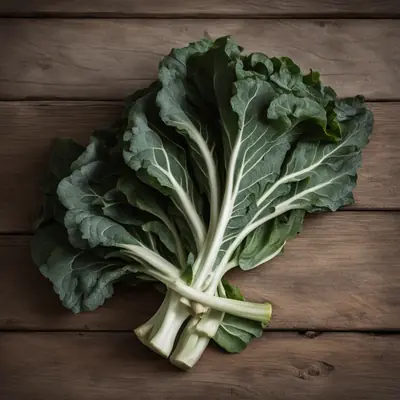
The heat-tolerant brassica
Unlike broccoli, cauliflower or most kale, collards keep producing usable leaves right through a southern summer. That makes them the one brassica you can plant in spring and still be picking in November. They still taste better after frost.
Give them room
Collards get large - two to three feet across and often as tall. Eighteen inches between plants is a minimum; crowding produces small leaves and encourages disease in the humid canopy.
Long season from one planting
A single spring planting, kept fed and watered, produces continuously into the following winter. Side-dress with nitrogen every four to six weeks to keep new leaves coming.
Harvest the lower leaves
Same method as kale: take the lowest mature leaves and leave the growing tip with a good crown of young ones. Hand-sized leaves are ideal; very large old ones go leathery.
Frost improves them
The starch-to-sugar conversion applies here too, and collards lose most of their harshness after a freeze. They are among the last things standing in a zone 6b/7 winter garden.
Pests
The full brassica cast - cabbageworm, looper, aphids, harlequin bugs. Because the plants are large and long-lived, row cover becomes impractical late on, so Bt for caterpillars and water sprays for aphids are the usual approach. Rotate out of brassicas for three years where you can.
Cooking
The thick central midrib is the tough part. Strip it for quick cooking, or leave it and braise long and slow, which is the traditional treatment. Young leaves are fine raw in a slaw.
Bolting and seed
Collards are biennial and bolt in their second spring. The flowering shoots are good eating, and one plant left to seed supplies plenty for next year - though it will cross with any other Brassica oleracea flowering nearby.
- Days to harvest
- 60-85
- Spacing
- 18 in
- Row spacing
- 24-36 in
- Sun
- Full
- pH
- 6.0-7.5
- Hardy to
- ~15F
- Season
- Spring through winter
- Water
- 1-1.5 in/week