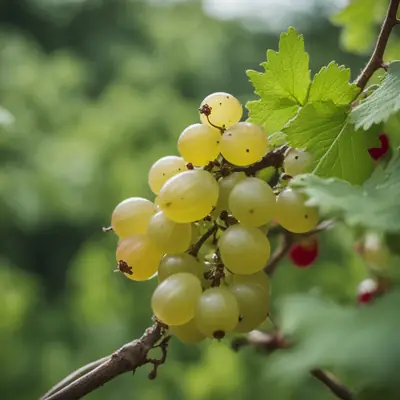
Currant & Gooseberry
Ribes spp.
Shade-tolerant, cold-hardy and restricted by law in some places because of white pine blister rust.
Check the legal position first
Ribes species are an alternate host for white pine blister rust, and some states and counties still restrict or ban planting - black currants most of all, since they are the most effective host. Rules have relaxed in many places and immune cultivars exist, but confirm with your extension office before buying. This is a real and occasionally enforced restriction.
They actually like shade
Among the very few fruits that crop decently in part shade, which makes them genuinely useful on the north side of a building or under high tree canopy. In hot climates some afternoon shade improves them. They also dislike heat, and our summers are near their upper limit.
Cool roots and moisture
Shallow-rooted and intolerant of drought and heat at the root. Mulch heavily, keep them evenly moist, and they will reward it. Soil should be well-drained but moisture-retentive.
Prune on cane age
Fruit is borne on one to three year old wood. Each late winter, remove any cane older than three years at the base, plus dead, weak and low-lying growth, aiming for a bush with roughly equal numbers of one, two and three year old canes - typically nine to twelve total. Gooseberries can also be trained as attractive single-stem standards or fans against a wall.
Black, red and white currants differ
Black currants fruit mostly on one-year wood, so they need harder renewal pruning - remove about a third of the oldest wood annually. Red and white currants fruit on spurs on older wood and need lighter pruning. Gooseberries are intermediate.
Pests and disease
Currant sawfly larvae can strip a bush of leaves in days - check leaf undersides in late spring and hand-pick or spray. Imported currantworm does the same. Powdery mildew, especially on gooseberries, appears as white felt on shoot tips in humid weather; choose resistant varieties and prune for airflow. Aphids curl new leaves.
Harvest
Currants are picked as whole strigs (the little bunches) once all berries have coloured; they hold on the bush well. Gooseberries can be picked early and firm for cooking, or left to ripen fully for dessert quality, when they soften and sweeten considerably. Wear gloves for thorned gooseberry varieties.
Kitchen and storage
They keep a week or more refrigerated, better than most soft fruit, and freeze very well. Black currants are exceptionally high in vitamin C and make outstanding cassis, jam and cordial; red currants are the classic jelly; gooseberries make superb fool, pie and chutney.
- Hardiness
- Zone 3-8
- First fruit
- Year 2-3
- Spacing
- 4-5 ft
- Sun
- Part shade fine
- pH
- 5.5-7.0
- Check
- Local Ribes rules
- Life
- 15-20 yrs
- Prune
- By cane age