Eggplant
Solanum melongena
Wants more heat than a pepper and sulks harder than a tomato if it does not get it.
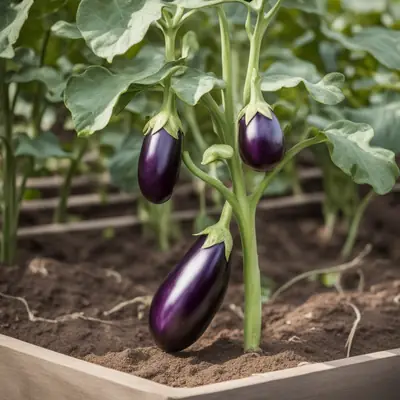
The most heat-demanding nightshade
Eggplant needs warmer soil and warmer nights than tomatoes or peppers. Do not set it out until nights are reliably above 60F - two weeks after your last frost date rather than on it. Cold-shocked plants sit still for a month and never fully catch up, and a plant set out late usually overtakes one set out early.
Starting seed
Sow indoors eight to ten weeks before last frost at 80-85F with bottom heat; germination is slow and uneven below that. Pot on before roots circle. Harden off gradually over a week, and use black plastic or a dark mulch to lift soil temperature at planting.
Soil and feeding
Rich, well-drained soil with plenty of compost. Feed moderately with a balanced fertiliser - heavy nitrogen gives a large leafy plant with little fruit. Once fruit sets, a potassium-leaning feed helps size them up.
Water and mulch
Steady, deep watering of about an inch a week. Irregular water causes bitter flesh and blossom drop. Mulch heavily to hold moisture and warmth.
Support
A plant carrying four or five large fruit gets top-heavy and branches snap. Stake or cage the larger varieties at planting, before the roots are in the way.
Flea beetles are the main pest
They pepper the leaves with shot-holes and can kill young plants outright. Floating row cover from transplanting until flowering is the most effective control - remove it once flowers open so pollinators can work. Older plants tolerate the cosmetic damage.
Other problems
Colorado potato beetle will feed on eggplant readily; hand-pick adults and crush the orange egg clusters on leaf undersides. Spider mites flare in hot dry spells - look for stippling and fine webbing and spray the undersides with water. Verticillium wilt is soil-borne and causes one-sided yellowing and collapse; rotate away from nightshades on a four-year cycle.
Pick glossy
Harvest while the skin still shines and springs back from a thumb press. A dull skin means the seeds have hardened and the flesh has turned bitter and spongy. Cut with an inch of stem using secateurs - the calyx is prickly and the stems are woody. Picking regularly keeps the plant setting more.
Storage
Keeps about a week. Do not refrigerate below 50F, which causes pitting and browning - a cool counter is better than the fridge. It does not store or freeze raw well; cook first, then freeze.
- Days to harvest
- 65-80 from transplant
- Start indoors
- 8-10 wks pre-frost
- Spacing
- 18-24 in
- Row spacing
- 30 in
- Sun
- Full
- pH
- 5.8-6.8
- Soil temp
- 70F+
- Support
- Stake heavy croppers