Elderberry
Sambucus canadensis
Native, vigorous, nearly indestructible, and the raw berries and all green parts are toxic.
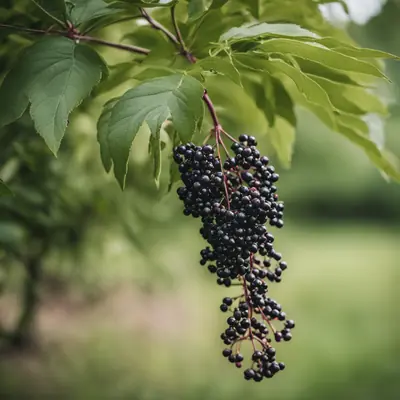
Cook them - this matters
Raw elderberries, along with the leaves, stems, bark and roots, contain cyanogenic glycosides and cause nausea, vomiting and diarrhoea. Cooking destroys them. Never eat the berries raw, never use the green parts, and strip berries fully off the stems before cooking, since the small stems carry the most. Red elderberry (Sambucus racemosa) is a different species and should not be eaten at all.
Plant two different varieties
Self-fertility is poor and yields improve dramatically with a second variety within about fifty feet. Named cultivars such as Adams, York, Bob Gordon and Nova are all reliable and readily available.
Site and soil
Extremely adaptable - they grow wild in ditches and along streams. They prefer moist, fertile soil and tolerate periodic wet feet better than almost any other fruit, which makes them useful for a damp corner where nothing else thrives. Full sun gives the best crops.
Shallow roots, needs water
The root system is shallow and fibrous, so they suffer in drought and compete badly with grass. Mulch well and water in dry spells, especially while establishing.
Pruning by cane age
Elderberry fruits best on one and two year old wood. From year three, cut out any canes older than three years at the base each late winter, along with dead and weak growth. They tolerate being cut completely to the ground and will regrow vigorously, which is a useful reset for a neglected plant.
They sucker
Expect suckers around the base and a gradually widening clump. Remove them annually or allow a hedge, which is often the most sensible use of the plant.
Pests and birds
Few serious problems. Birds are the real competition and will strip ripe clusters quickly - net if you want the crop. Spotted wing drosophila affects them as it does other soft fruit. Elder borer occasionally attacks canes.
Harvest and use
Cut whole cymes (flower-head clusters) when the majority of berries are fully deep purple-black and slightly soft. Strip the berries from the stems with a fork or by freezing the cluster and shaking. Use for syrup, jelly, wine and cordial. The flowers, picked in early summer, are also usable for cordial and fritters - but taking flowers means no berries from that head.
- Hardiness
- Zone 3-9
- First fruit
- Year 2-3
- Spacing
- 6-10 ft
- Sun
- Full to part
- pH
- 5.5-7.0
- Pollination
- Two varieties better
- Height
- 6-12 ft
- Toxicity
- Cook the berries