Fig
Ficus carica
Marginal here, and entirely doable if you accept it will die back and resprout.
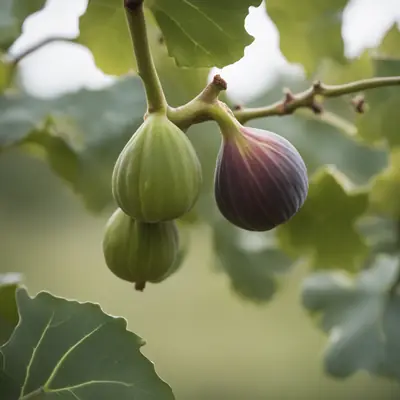
Choose a common fig
Grow only "common" fig varieties (Brown Turkey, Celeste, Chicago Hardy, LSU Purple), which set fruit without pollination. Smyrna and caprifig types require a specific wasp that does not exist here and will drop every fruit.
Winter protection is the whole game
In zone 6b/7 the top growth often dies back to the ground. Plant against a south-facing wall for reflected heat, mulch the crown a foot deep after the ground freezes, and in colder spots wrap the whole plant or bend and bury the canes. Even if the top dies, an established root system resprouts vigorously in spring.
Or grow it in a pot
A fig in a large container, moved into an unheated garage or basement for winter and brought out in spring, is the most reliable way to fruit one here. Water it lightly perhaps once a month while dormant so the roots do not desiccate completely.
Two crops, and which one you get
The breba crop forms on last season's wood in early summer; the main crop forms on new wood in late summer. If the plant dies back over winter you lose the breba and keep only the main crop - which is another argument for protecting the wood if you can.
Do not overfeed
Figs fruit better on lean soil and with restricted roots. Heavy nitrogen produces enormous leafy growth and little fruit, and delays ripening past the point where the season can finish it. Restricting the roots, in a pot or by planting in a confined space, actually improves cropping.
Water matters at fruiting
Reasonably drought-tolerant once established, but irregular water while fruit is sizing causes splitting and fruit drop. Mulch and water steadily through the fruiting period, then ease off.
Pests
Comparatively few here. Birds are the main competition as fruit ripens - netting helps. Fig rust causes yellow-brown leaf spots and early defoliation in humid summers. Root-knot nematodes affect figs in sandy soil.
Ripeness and harvest
A ripe fig hangs down rather than sticking out, softens noticeably, and the skin may split slightly with a drop of nectar at the eye. Figs do not ripen at all after picking - a fig picked firm stays firm and bland, so patience is the entire technique. The white sap from unripe fruit and stems is a skin irritant.
Storage
Two or three days at most; they are extremely perishable. Dry, freeze or make jam - drying is the traditional answer and works well in a dehydrator.
- Hardiness
- Zone 6-10 with protection
- First fruit
- Year 2-3
- Spacing
- 10-15 ft
- Sun
- Full, south wall ideal
- pH
- 6.0-7.0
- Pollination
- Self-fertile (common types)
- Crops
- Breba + main
- Container
- Works well