Hardy Kiwi
Actinidia arguta
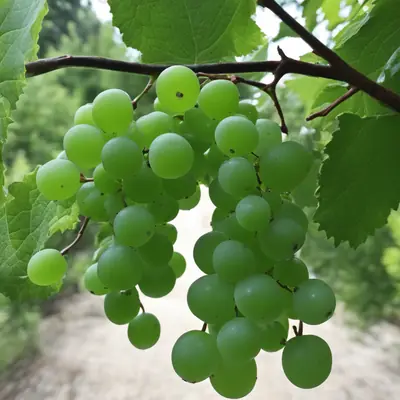
A grape-sized smooth-skinned kiwi on a vine that will pull down a weak trellis.
You need both sexes
Hardy kiwi is dioecious - male and female flowers on separate plants. One male pollinates up to eight females, but without him you get abundant vine and no fruit whatsoever. Buy named sexed plants rather than seedlings, which take years to reveal their sex. Issai is a partially self-fertile female if you have room for only one, though yields are lower.
Build a serious structure
A mature vine is genuinely heavy and extremely vigorous, capable of putting on twenty feet in a season and pulling down an ordinary arbour. Use pressure-treated posts set in concrete and heavy-gauge wire, or a substantial pergola. This is not a plant for a flimsy trellis.
Late frost is the weak point
Although the dormant vine is very hardy - to -25F or lower - it leafs out early and the new growth is killed by late spring frosts, which can wipe out the crop and set the plant back. Site it where it warms up late, away from frost pockets, and be prepared to cover young vines.
Soil and water
Well-drained, slightly acidic, high in organic matter. They are intolerant of waterlogging, which causes root rot, but also of drought, having large leaves that transpire heavily. Mulch and irrigate through dry summers.
Pruning
Establish a trunk and two permanent arms like a grape. Prune hard in late winter, cutting back the previous season's growth to a few buds beyond the last fruiting position, and again in summer to control rampant growth and keep light in the canopy. Expect to prune two or three times a season once established - this is a high-maintenance vine.
Patience
Three to five years to first fruit, sometimes longer. The vine spends its early years building an enormous root system and framework.
Pests
Very few - one of its attractions. Cats are notoriously attracted to Actinidia, much as to catnip, and will shred young plants; a wire guard around new vines is often necessary. Japanese beetles occasionally feed on leaves.
Harvest and storage
Fruit ripens in early autumn. Pick when the first few soften and the seeds inside have turned black; the rest can be harvested firm and ripened indoors, which is the usual practice since they ripen unevenly. The skin is smooth and thin - the whole fruit is eaten like a grape. Firm fruit stores a month or more refrigerated and ripens on demand at room temperature.
- Hardiness
- Zone 4-8
- First fruit
- Year 3-5
- Spacing
- 10-15 ft
- Sun
- Full to part
- pH
- 5.5-7.0
- Pollination
- Male + female
- Vine weight
- Very heavy
- Skin
- Smooth, edible