Heirloom Tomato
Solanum lycopersicum
Better flavour, worse everything else, and seed you can save and replant true.
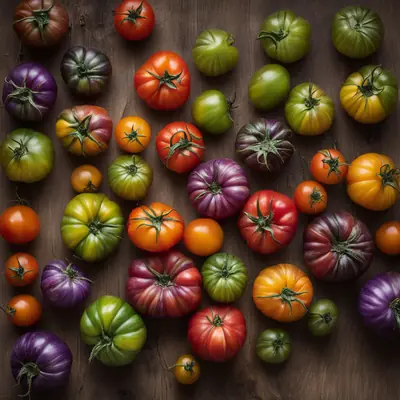
What heirloom actually means
An open-pollinated variety, generally fifty years old or more, whose seed comes true to type when saved - unlike an F1 hybrid, whose offspring segregate into a mess of parental traits. That is the real definition; flavour is a consequence of what those varieties were selected for, which was taste rather than shipping durability.
Accept the trade
Heirlooms typically have no bred-in disease resistance, crack and catface more, produce less, and ripen later. In exchange you get flavour, colour and texture that hybrids rarely match. Growing a couple of heirlooms alongside two or three resistant hybrids is the pragmatic approach - you get the eating quality and still have tomatoes if a wilt arrives.
Almost all indeterminate
Brandywine, Cherokee Purple, Black Krim, Green Zebra, Mortgage Lifter and the rest are indeterminate and vigorous. Prune to one or two leaders and use serious support - a stake, a Florida weave, or string to an overhead wire. Pruning improves airflow, which matters more than usual since there is no genetic resistance backing you up.
Disease management is entirely cultural
Rotate on four years. Mulch heavily. Strip the lower twelve inches of leaves and keep going as they yellow. Space widely - thirty-six inches, not twenty-four. Water only at the base, only in the morning. None of this is optional with heirlooms; it is the resistance programme.
Grafting is a real option
Heirloom scions grafted onto vigorous disease-resistant rootstock give heirloom flavour with hybrid toughness and much higher yields. Grafted plants are sold commercially and are worth the price on ground with a known wilt problem. Plant them with the graft union above soil level or the scion roots and you lose the benefit.
Cosmetic problems are normal
Green shoulders, catfacing, radial cracks, uneven ripening and odd shapes are characteristic of heirlooms, not signs of failure. Cut around them.
Saving seed
Scoop the pulp of a fully ripe fruit into a jar with a little water, leave at room temperature two to four days until it ferments and a mould forms - this destroys the germination-inhibiting gel and several seed-borne diseases. Rinse, dry completely on a plate, and store cool and dark. Tomatoes are largely self-pollinating, so isolation is rarely needed for a home garden, though potato-leaf varieties cross more readily.
Harvest and storage
Pick at full colour with real give. Heirlooms are usually best eaten within a day or two - most are poor keepers and that is part of why you never see them in shops. Never refrigerate.
- Habit
- Almost all indeterminate
- Days to harvest
- 75-95
- Spacing
- 30-36 in
- Support
- Heavy
- Sun
- Full
- pH
- 6.2-6.8
- Disease resistance
- Usually none
- Seed
- Saves true