Hubbard & Kabocha
Cucurbita maxima
The sweetest, driest winter squash, on the biggest vines, from the species that makes the biggest fruit.
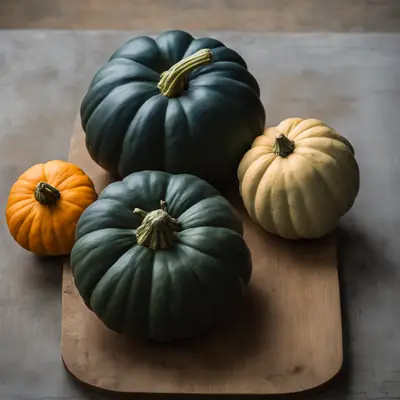
Cucurbita maxima - a third species
Hubbard, kabocha, buttercup and the giant pumpkins are all C. maxima, distinct from pepo (zucchini, acorn) and moschata (butternut). The flesh is drier, denser and sweeter than either, which is why kabocha is the preferred squash for tempura and for anything where you do not want water.
They need a lot of room
Vines run twelve to twenty feet and the plants are large. This is not a small-garden crop unless you are prepared to train the vines down a path or into an unused corner. Space plants four to six feet apart with eight to ten feet between rows.
Long season - start on time
Ninety-five to a hundred and twenty days puts a late sowing at risk in zone 6b/7. Sow direct as soon as soil is reliably 65F, or start in peat pots two to three weeks early. Do not delay these the way you might delay a summer squash to dodge borers.
Partial borer resistance
C. maxima stems are thicker and somewhat more resistant than pepo, though not immune like moschata. Vines also root at the nodes where they touch soil, so a plant can survive a borer strike at the crown if the runners have rooted - burying a few nodes deliberately is cheap insurance.
Heavy feeding and water
Very hungry. Generous compost or rotted manure, a mounded planting position, and side-dressing once the vines run. Consistent water while fruit sizes, then reduce as they mature and the rinds harden.
Thin the fruit
On the large Hubbard types, limiting each vine to two or three fruit gives much better size and quality than letting five or six develop. Kabocha can carry more, being smaller.
Ripeness
The rind becomes rock hard and cannot be dented with a thumbnail, the ground spot turns deep orange or cream, and the stem starts to dry and cork. Kabocha in particular is often picked too early - a fully ripe one has a dull matte skin and a hard corky stem, and it should then be stored a month before eating, which develops the sweetness considerably.
Curing and storage
Cut with several inches of stem and cure ten to fourteen days at 80-85F. Store at 50-55F with good air circulation, not touching. Hubbards keep five to six months; kabocha three to four and improves for the first month or two.
Practical note on Hubbards
A blue Hubbard can weigh twenty pounds with a rind hard enough to blunt a knife. The traditional method is to drop it on concrete or use a cleaver and a mallet. Cut portions freeze well cooked and puréed - a single fruit is a lot of squash.
- Days to harvest
- 95-120
- Spacing
- 4-6 ft
- Row spacing
- 8-10 ft
- Sun
- Full
- pH
- 6.0-6.8
- Cure
- 10-14 days
- Storage
- 3-6 months
- Fruit size
- 3-20 lb+