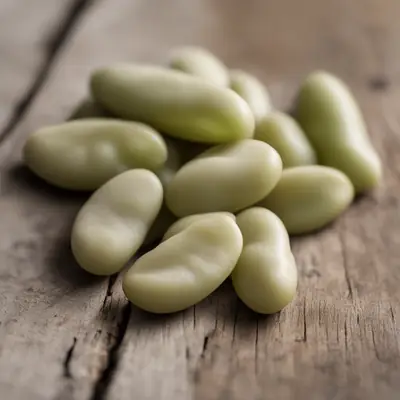
Lima Bean
Phaseolus lunatus
Needs more heat and a longer season than a green bean, and will not set pods in a cold snap.
Warm soil, and be patient
Lima seed rots readily in cool damp ground - wait a full two weeks past last frost and 65F soil. This is the main reason a lima planting fails outright. They also need a longer season than snap beans, so do not delay too far either.
Bush or pole
Bush limas mature in sixty-five to seventy-five days and crop over a shorter window. Pole limas take eighty-five to ninety days, need real support, and produce for much longer with a bigger total yield. In zone 6b/7 both work; pole types want an early start.
Blossom drop
Sustained heat above 90F, cold nights below 60F, or drought can all make flowers drop without setting pods. There is little to be done about temperature, but even moisture and a good mulch measurably reduce the losses.
No nitrogen, moderate water
Like other beans they fix nitrogen. Water steadily through flowering and pod fill; erratic water is the other main cause of poor set.
Pests
Mexican bean beetle, aphids and spider mites, as with other beans. Stink bugs feed on developing seeds and cause pitted, discoloured beans.
Harvest green or dry
For green limas, pick when the pods are plump, bright and the seeds well formed but still tender - the pod will feel full and slightly bumpy. For dry beans, leave them on the plant until the pods are brown and brittle and the seeds rattle.
A note on raw limas
Raw lima beans, particularly coloured heirloom types, contain cyanogenic compounds. Cook them thoroughly and discard the cooking water for the strongly coloured varieties. Ordinary green limas cooked normally are entirely safe.
Storage
Shelled green limas keep a few days and freeze well after blanching. Dry limas, fully dried and stored airtight, keep for years.
- Days to harvest
- 65-90
- Spacing
- 4-6 in
- Row spacing
- 24-30 in
- Sun
- Full
- pH
- 6.0-7.0
- Soil temp
- 65F+
- Types
- Bush and pole
- Support
- Pole types need 6-8 ft