Parsnip
Pastinaca sativa
The slowest thing in the garden, and worth it only if you leave it out through hard frost.
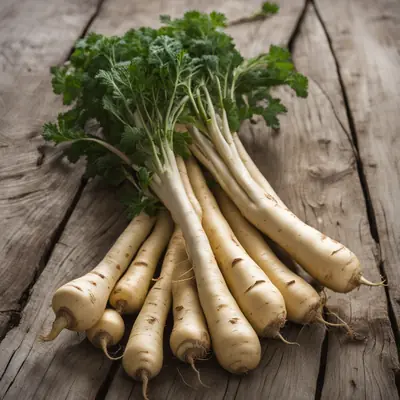
Fresh seed only, every year
Parsnip seed loses viability within about a year - old seed simply will not come up, and this is the single commonest parsnip failure. Buy new seed every season and do not try to save money on it.
Slow, difficult germination
Three to four weeks is normal. The surface must stay damp throughout, exactly as with carrots. Sow thickly to compensate for patchy germination, cover the row with a board or damp burlap, and mark the row with radishes so you can weed around it.
Deep loose soil
Roots go down eight to twelve inches. Stones, clods and compacted layers cause forking. Do not use fresh manure - it causes hairy forked roots.
A very long season
Sown in April, they are not ready until late autumn. They occupy the bed for the entire growing season, which needs planning. Interplant with a fast crop like radish while the parsnips are small.
Frost is mandatory, not optional
Parsnips are starchy and bland until several hard freezes convert the starch to sugar. Harvest from late autumn right through winter as needed. In zone 6b/7 they can stay in the ground under mulch and be dug whenever the soil is workable - which is also the best way to store them.
The sap burns
Parsnip foliage causes phytophotodermatitis: sap on skin, then sunlight, produces a blistering burn that can scar and leaves marks for months. This is not a minor irritation. Harvest and handle the tops in long sleeves and gloves, ideally on a dull day or in the evening, and wash your arms afterwards.
Pests and disease
Carrot rust fly attacks parsnips too, tunnelling the roots - the same insect mesh barrier works. Canker causes brown or black rot at the shoulder in wet ground; raised beds, good drainage and resistant varieties help.
Harvest and storage
Lift carefully with a fork - the roots are long, brittle and easy to snap. They keep in the ground all winter, or several months in damp cold storage once lifted. They freeze well after blanching, and roast better than almost any other root.
- Days to harvest
- 100-130
- Spacing
- 4 in
- Row spacing
- 18 in
- Depth
- 1/2 in
- Sun
- Full
- pH
- 6.0-7.0
- Germination
- 18-28 days
- Harvest
- After hard frost