Pawpaw
Asimina triloba
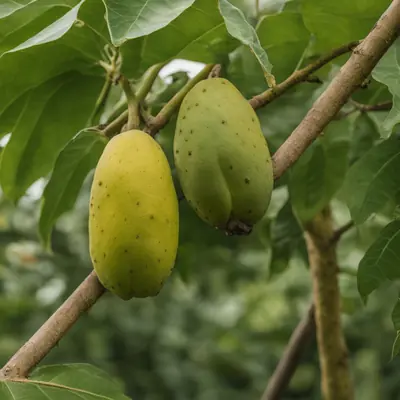
The largest fruit native to North America, and it grows wild in this river valley.
Two genetically distinct trees
Pawpaws are self-incompatible, and - importantly - root suckers from one tree are all the same clone and will not pollinate each other. You need two genetically different plants, which means two named grafted varieties or two unrelated seedlings.
Pollination is poor and worth helping
The maroon flowers are pollinated by flies and beetles rather than bees, and natural fruit set is often low. Hand-pollinating with a small brush, moving pollen between two different trees when the stigma is green and receptive and the pollen is dark and loose, dramatically improves set. Some growers hang something unpleasant nearby to attract flies, which works but is not for everyone.
Shade when young, sun when mature
Pawpaw seedlings are understory plants and their leaves burn in full sun for the first year or two. Shade them with cloth or a taller neighbour initially, then let them into full sun, which is where they fruit best.
Difficult to transplant
They have a brittle taproot and few fibrous roots, so bare-root transplanting often fails. Buy container-grown stock, plant in spring rather than autumn, and disturb the rootball as little as possible.
Soil and water
Deep, fertile, well-drained but consistently moist soil, slightly acidic. They grow naturally on river bottoms, which tells you what they like. Mulch well and water through dry spells for the first few years.
Pruning and suckers
Minimal pruning - remove dead or crossing wood in late winter. They sucker freely from the roots; remove suckers unless you want a thicket, remembering that suckers are clones and will not pollinate the parent.
Almost no pests
One of the great advantages: the leaves and bark contain natural insecticidal compounds, so deer leave them alone and there is essentially no pest or disease pressure. The zebra swallowtail butterfly depends on pawpaw as its only larval host, which is a reason to tolerate a little leaf damage.
Harvest
Ripe fruit softens like a ripe mango, the skin may lighten or develop brown flecks, and it detaches with a gentle tug. They also drop when ripe. Slightly firm fruit will finish on the counter in a couple of days.
The shelf life problem
Ripe pawpaws keep two or three days at room temperature and perhaps a week refrigerated. This is exactly why you have never seen one in a shop and why growing your own is the only realistic way to eat them. The pulp freezes very well - scoop it, remove the large seeds, and freeze for ice cream, custard and quick breads. The seeds and skin should not be eaten.
- Hardiness
- Zone 5-8
- First fruit
- Year 4-7
- Spacing
- 15-20 ft
- Sun
- Part shade when young, full later
- pH
- 5.5-7.0
- Pollination
- Needs two unrelated
- Shelf life
- 2-3 days
- Pests
- Almost none