Pear
Pyrus communis
The one fruit you must pick unripe. A pear ripened on the tree is gritty and brown inside.
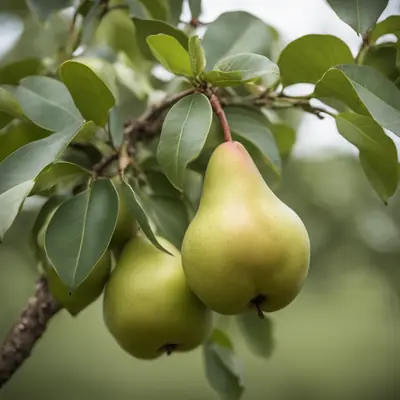
Pick hard, ripen indoors
European pears ripen from the inside out. Left on the branch the core turns to mush and grit while the outside is still firm. Pick when the fruit is full-sized but still hard and the stem separates when you lift the pear to horizontal. Then ripen at room temperature for five to ten days, or chill first for the winter varieties.
Cold treatment for late varieties
Winter pears such as Bosc, Comice and Anjou need a period of cold - two to six weeks at around 32-40F depending on variety - before they will ripen properly. Bartlett and other summer pears ripen without it.
Pollination
Most pears need a second variety flowering at the same time. Bartlett is partially self-fruitful but crops far better with a partner. Note that European and Asian pears will cross-pollinate each other, which is useful.
Fire blight is the main threat
Pears are more susceptible than apples. Shoots wilt suddenly, blacken as if scorched, and bend into a shepherd's crook; it can kill a whole tree. Prune well below visible damage - at least eight to twelve inches into healthy wood - in dry weather, sterilising the blades between every cut. Avoid heavy nitrogen and heavy summer pruning, both of which produce the soft growth it colonises. Choose resistant varieties (Magness, Moonglow, Harrow Sweet) where you can.
Training and pruning
Pears naturally grow more upright and vigorous than apples. Train to a central leader, and spread young branches with limb spreaders or weights to encourage wider crotch angles, which are stronger and fruit better. Prune more lightly than you would an apple to avoid stimulating blight-prone growth.
Thinning
Thin clusters to one or two fruit, spaced about six inches apart, after natural drop. Pears set heavily and unthinned trees produce small fruit and break limbs.
Other pests
Codling moth and pear psylla are the main insects; psylla causes sticky honeydew and sooty mould and is worse on over-fertilised trees. Pear scab and pear rust occur but are usually secondary to fire blight in this region.
Asian pears differ
Asian pears (Pyrus pyrifolia) are round, crisp and apple-textured, and unlike European pears they do ripen on the tree and are picked ready to eat. They also need heavier thinning. Do not apply the European pick-hard rule to them.
Storage
Picked hard and kept at 32-35F, summer pears hold a month and winter varieties up to three. Bring out a few at a time to ripen at room temperature as needed - that staggered approach is the whole advantage of growing pears.
- Hardiness
- Zone 4-8
- First fruit
- Year 4-6
- Spacing
- 15-20 ft
- Sun
- Full
- pH
- 6.0-7.0
- Pollination
- Needs a partner
- Ripen
- Off the tree, 5-10 days
- Storage
- 1-3 months