Persimmon
Diospyros virginiana / kaki
The American species is native here, ferociously astringent until dead ripe, and then superb.
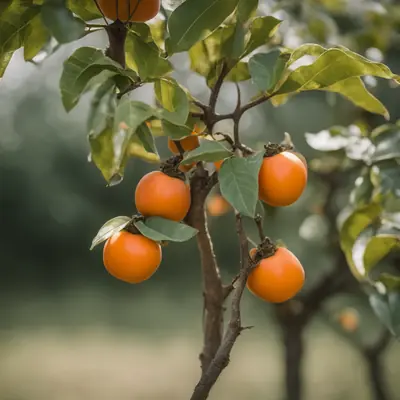
Two very different species
American persimmon (Diospyros virginiana) is native to this river valley, extremely hardy, makes a large tree, and bears small intensely flavoured fruit. Asian or kaki persimmon (D. kaki) bears much larger fruit, includes non-astringent varieties you can eat firm, but is only hardy to about zone 7 and is marginal at the cold end of 6.
Astringency is not a small thing
An underripe astringent persimmon is genuinely unpleasant - the tannins strip your mouth and the sensation lasts. American persimmons must be soft to the point of near-collapse before eating. The folklore that frost is required is not quite true; full ripeness is what matters, and frost merely tends to coincide with it.
Male and female trees
American persimmons are usually dioecious - separate male and female trees - so you need a male within range for fruit, unless you plant a self-fruitful named cultivar such as Meader. Asian persimmons are more often self-fruitful, though fruit set and seediness vary.
Non-astringent Asian types
Fuyu and similar can be eaten firm and crisp like an apple. They are the better choice if you dislike waiting for mush, but check hardiness carefully for your site and consider a sheltered south-facing position.
Site and soil
Very adaptable and tolerant of poor soil, drought and heat once established - one of the least demanding fruit trees available here. They do have a long taproot and resent transplanting, so plant young trees and site them permanently.
Pruning
Prune lightly in late winter to build a strong open framework and remove dead or crossing wood. Fruit is borne on new growth from one-year-old wood. Heavy pruning is neither needed nor helpful.
Pests and disease
Remarkably trouble-free - one of the main reasons to grow them. Persimmon psylla curls new leaves on Asian types; occasional leaf spot occurs. No spray programme is required.
Harvest and storage
American persimmons drop when ripe, and collecting them daily off the ground is the normal method. Asian types are cut with secateurs leaving the calyx attached. Astringent fruit can be picked firm and ripened indoors, and freezing overnight or storing with apples (ethylene) speeds the process. Pulp freezes extremely well and is the classic base for persimmon pudding and bread.
- Hardiness
- Zone 4-9 (American)
- First fruit
- Year 4-7
- Spacing
- 20-30 ft
- Sun
- Full
- pH
- 6.0-7.5
- Native
- Yes (D. virginiana)
- Pollination
- Usually needs male
- Pests
- Very few