Plum
Prunus domestica / salicina
European types are mostly self-fertile; Japanese types mostly are not.
Know which type you have
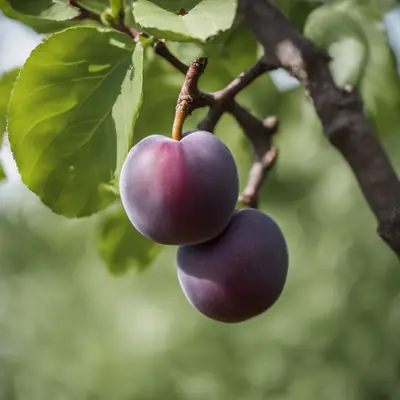
European plums (Prunus domestica - prunes, gages, damsons) are generally self-fertile, bloom later so they dodge more frosts, and are sweeter and better for drying and cooking. Japanese plums (P. salicina) bloom early, are usually self-incompatible and need another Japanese plum, and are juicier for fresh eating. The two types do not reliably pollinate each other.
Site for frost
Japanese plums in particular bloom early enough to be caught. Same rules as peaches - a slope with good cold-air drainage, or a north aspect to delay bloom.
Pruning by type
European plums fruit on long-lived spurs and need only light annual thinning of crossing and crowded wood, trained to a central leader. Japanese plums grow vigorously and fruit on one-year wood and short spurs, so they need harder annual pruning to an open vase. Prune in late winter, or in summer in wet regions to reduce silver leaf infection.
Thin the fruit
Plums set very heavily and will break their own limbs. Thin to three or four inches apart after natural drop. Unthinned trees also tend toward biennial bearing.
Black knot
The signature disease of plums and cherries in this region: hard black corky swellings that girdle branches, spreading slowly and eventually killing the tree. Cut out every knot in winter, at least six to eight inches below the swelling into clean wood, and burn or bin the prunings - do not compost them. Check wild plums and cherries nearby, which are usually the reservoir.
Brown rot and plum curculio
Brown rot mummifies ripening fruit in humid weather; sanitation - removing every mummy - is the main control. Plum curculio leaves a distinctive crescent scar on young fruit and causes it to drop; collecting and destroying dropped fruitlets breaks the cycle.
Harvest
Ripe plums give slightly to gentle pressure, develop a dusty bloom on the skin, and detach easily. Unlike peaches they colour up well before they are actually ripe, so go by feel and taste rather than colour. Pick over the tree several times.
Storage and use
Two to four weeks at 32-35F, which is longer than most stone fruit. European types dry into prunes very well and are the classic canning and jam plum; Japanese types are best fresh.
- Hardiness
- Zone 4-8
- First fruit
- Year 3-5
- Spacing
- 15-20 ft
- Sun
- Full
- pH
- 6.0-7.0
- Pollination
- Type dependent
- Bloom
- European later, Japanese early
- Storage
- 2-4 weeks