Floury Potato (russet type)
Solanum tuberosum
High starch, low moisture. It bakes and fries and falls apart in a stew.
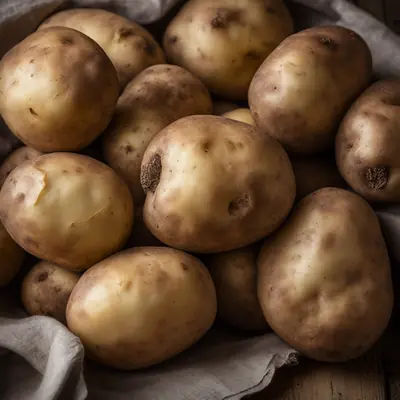
Starch is the whole distinction
Floury or mealy potatoes - Russet Burbank, Kennebec, Katahdin, Idaho types - have high dry-matter and starch content and low moisture. The cells separate when cooked, giving the light fluffy texture that makes a good baked potato, a dry mash and a crisp chip. The same property makes them disintegrate in soups and salads.
Late maincrop, long season
Most floury varieties are late maincrop types needing ninety to a hundred and twenty days. Plant two to four weeks before last frost and expect to lift in late summer. They occupy the bed a long time and yield accordingly.
Hill twice
Tubers form on stolons above the seed piece, never below. Pull soil or straw up around the stems twice as they grow, burying the lower third each time. More buried stem means more potatoes and keeps developing tubers out of the light.
Do not lime, do not use fresh manure
Potatoes prefer acidic soil around pH 5.0-6.0, partly because common scab is suppressed there. Fresh manure encourages scab too. Russeted skins hide scab better than smooth-skinned types, which is a practical advantage.
Water evenly, then dry off
Consistent moisture from flowering onward is when tubers bulk; irregular water gives hollow heart, knobbles and cracks. Stop watering once the foliage begins dying back so skins can set for storage.
Colorado potato beetle
Striped adults, red larvae and orange egg clusters on leaf undersides. Hand-pick early and crush eggs; Bt tenebrionis and spinosad work but the beetle develops resistance fast, so rotate crop and control alike.
Green means solanine
Any tuber exposed to light greens and accumulates solanine, which is toxic and bitter. Hill properly, store in the dark, and cut green areas away generously or discard.
Harvest, cure and store
Wait for the tops to die back, then leave two more weeks to set skins. Lift on a dry day, cure at 50-60F in the dark for ten to fourteen days, then store at 40-45F, dark and humid. Floury maincrop types are the best keepers - five to six months. Never refrigerate below 40F: the starch converts to sugar and they brown badly and taste sweet when fried.
- Type
- High starch, floury
- Days to harvest
- 90-120 (late)
- Spacing
- 12 in
- pH
- 5.0-6.0
- Uses
- Baking, frying, mashing
- Storage
- 5-6 months
- Skin
- Thick, russeted
- Scab
- Russets resist better