Raspberry
Rubus idaeus
Pruning depends entirely on whether you have summer-bearing or everbearing canes.
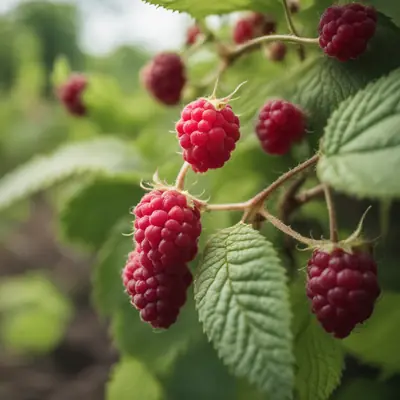
Biennial canes on a perennial root
The root system is perennial but each individual cane lives two years: it grows vegetatively in year one as a primocane, fruits in year two as a floricane, then dies. Understanding this is the whole basis of pruning raspberries, and almost every raspberry problem traces back to not understanding it.
Know your type before you prune
Summer-bearing (floricane) types fruit once, in early summer, on second-year canes - cut out only the canes that have just fruited, right after harvest, leaving this year's new canes. Everbearing (primocane) types fruit in autumn on first-year canes and can simply be mown to the ground each late winter for one clean autumn crop. Cutting a summer-bearer to the ground removes the entire next crop.
Remove spent canes promptly
Floricanes are dead wood the moment they finish fruiting and they harbour disease and pests. Cut them at ground level and remove them from the area rather than leaving them in the row.
Support
A simple T-trellis with wires either side of the row keeps canes upright, improves airflow and makes picking far easier. Without it, canes arch over, tip-root where they touch, and the row sprawls into a thicket.
They run, aggressively
Raspberries sucker from the roots and will colonise a garden. Define the bed, mow or cut anything that escapes the row, and be prepared to do this every year. A physical root barrier helps in small gardens.
Soil and water
Well-drained slightly acidic soil - they hate wet feet and root rot is a common cause of decline. Steady water during fruit fill is important. Mulch to keep roots cool and moist.
Pests and disease
Spotted wing drosophila is now the dominant problem, laying in ripening fruit; harvest completely and frequently, and refrigerate immediately. Japanese beetles skeletonise leaves. Cane borers cause wilting tips with two rings girdling the cane - cut below the rings. Anthracnose and spur blight cause cane lesions; airflow and removing old canes help. Do not plant where tomatoes, potatoes or eggplant have grown, because of verticillium.
Harvest and storage
A ripe raspberry pulls free leaving the core on the plant - if you have to tug, it is not ready. Pick every day or two in the cool of the morning. They keep only two or three days refrigerated, do not wash until use, and freeze very well spread on a tray first.
- Hardiness
- Zone 3-8
- First fruit
- Year 2
- Spacing
- 2-3 ft
- Row spacing
- 6-8 ft
- Sun
- Full
- pH
- 5.5-6.5
- Support
- Trellis recommended
- Life
- 10-15 yrs