Rutabaga
Brassica napus
A long-season turnip relative built for storage, and much better after a hard frost.
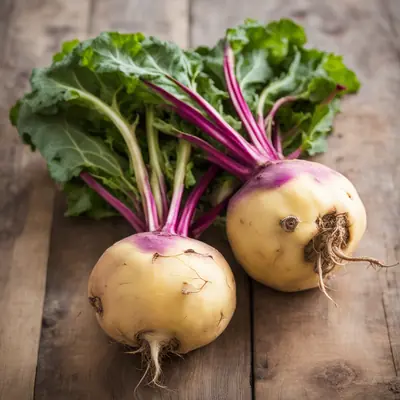
Sow in midsummer
Rutabaga needs a long cool finish. Sow late June into July for an autumn and early winter harvest. Spring sowings mature into heat and turn woody and strong. Count back roughly a hundred days from your first hard frost.
Thin properly
They need considerably more room than turnips - six to eight inches. A crowded rutabaga will not size up, and this is the commonest reason for a disappointing crop.
Frost sweetens it dramatically
The starch-to-sugar conversion is more pronounced here than in almost any other vegetable. Leave them through several hard freezes; they improve every time. In zone 6b/7 they can stay in the ground under mulch well into winter.
Consistent moisture
Irregular water causes cracking and woody texture. An inch a week, mulched to even it out through a dry late summer.
Boron
Rutabaga is prone to brown heart - a dark corky bitter centre - from boron deficiency, common in high-pH or sandy soil. It is invisible until you cut the root open. Correct only on a soil test; boron is toxic in excess.
Pests
Cabbage root maggot and flea beetles are the main issues. A midsummer sowing avoids the worst root maggot generations. Rotate out of brassicas for three years.
Harvest
Lift when roots are three to five inches across, after frost. Trim tops to an inch and do not wash - soil on the skin helps them keep.
Storage
One of the best keepers in the garden: four to six months just above freezing at high humidity. Commercial rutabagas are waxed, which you do not need at home; a perforated bag in a cold garage works well.
- Days to harvest
- 90-110
- Sow
- Midsummer
- Spacing
- 6-8 in
- Row spacing
- 18 in
- Sun
- Full
- pH
- 6.0-7.0
- Harvest
- After frost
- Storage
- 4-6 months