Savoy Cabbage
Brassica oleracea var. sabauda
The crinkled one. Hardiest of the cabbages, best flavour, and the loosest head.
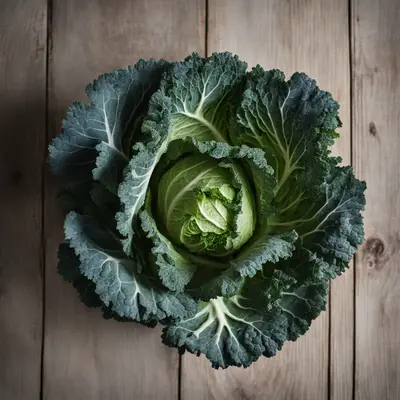
The best-flavoured cabbage
Savoy has a milder, sweeter, more delicate flavour than a smooth green cabbage and a much better texture cooked - the crinkled leaves hold sauce and stay tender rather than going stringy. It is also the best cabbage for stuffing, since the leaves are pliable.
The hardiest, and frost improves it
Savoy withstands hard frost and light freezes better than any other cabbage, and the flavour genuinely sweetens after a frost or two. That makes it an autumn and early-winter crop: start in midsummer for harvest from October onward.
Looser heads mean shorter storage
The crinkled leaves do not pack as tightly as a smooth green or red cabbage, so savoy keeps three to six weeks rather than months. Grow it to eat, not to store.
Start indoors and transplant
Sow indoors four to six weeks before setting out. For an autumn crop, sow in June and transplant in July. Plant slightly deeper than they were in the pot, up to the first true leaves.
Rich soil and near-neutral pH
Heavy feeder. Plenty of compost and nitrogen side-dressings every three to four weeks. Brassicas want pH 6.5-7.5 - lime acidic soil, which also suppresses clubroot.
Steady water prevents splitting
A heavy watering after a dry spell makes heads split. Even moisture and a good mulch prevent it. If a head is on the point of splitting, twisting the plant a quarter turn to break some roots slows uptake and buys time.
Pests
Cabbage worms (imported cabbageworm, cabbage looper, diamondback moth) are the main problem - floating row cover from transplanting is the cleanest control, and Bt works well otherwise. Cabbage root maggot attacks the stem base; collars help. Aphids hide in the crinkles, where they are harder to wash out than on a smooth cabbage. Flea beetles pepper seedlings.
Clubroot
A soil-borne disease causing swollen distorted roots and stunted wilting plants. It persists for years, so rotate brassicas on a four-year cycle and keep pH up.
Harvest and storage
Cut when the head feels firm, leaving the outer wrapper leaves and the stem in place - a second flush of small heads often sprouts from the stump. Three to six weeks in a cold humid place.
- Days to harvest
- 80-110
- Spacing
- 18-24 in
- Row spacing
- 24-30 in
- Sun
- Full
- pH
- 6.5-7.5
- Hardiness
- Takes hard frost
- Head
- Loose, crinkled
- Storage
- 3-6 weeks