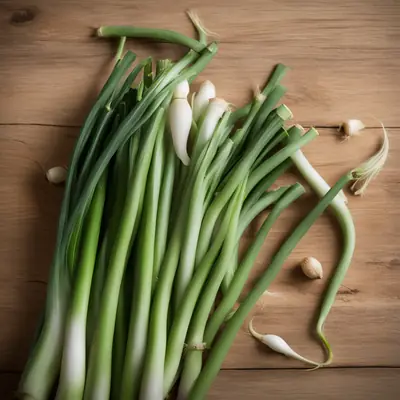
Scallion
Allium fistulosum
Forty days from sowing to the kitchen, and it will regrow if you cut rather than pull.
Sow thickly
Scallions do not need room to bulb, so crowding is fine. Sow a dense band about an inch apart and harvest by thinning; whatever remains keeps growing. This is one of the highest-yield uses of a narrow strip of bed.
Three ways to get them
True bunching onions (Allium fistulosum) never form a bulb and are the proper crop. You can also pull ordinary onions young, or regrow supermarket scallion bases in soil - but bunching types are better and hold in good condition much longer.
Cut and come again
Cut an inch above the crown rather than pulling, and most plants regrow for a second and often third cutting. Pull only when you want the whole white base.
Succession sowing
Sow a short row every three weeks from March through September. They bolt in real summer heat, but bolted stalks are still usable if a little tougher, and the flower heads are good in salads.
Blanching for longer whites
Hilling soil around the stems as they grow, or planting in a shallow trench and filling gradually, produces a longer white section. Not necessary, but worth doing if the white part is what you use.
Winter growing
Hardy enough to overwinter under a low tunnel or heavy mulch in zone 6b/7, giving very early spring pickings before anything else is ready. Perennial bunching types can be left in place and divided.
Pests
Largely trouble-free. Onion thrips cause silvering in hot dry weather and respond to a hose spray. Rotate away from other alliums to avoid building up soil-borne problems.
Storage
Best used fresh - they wilt within days. Stand cut scallions in an inch of water on the counter, or freeze chopped greens, which hold their flavour well for cooking.
- Days to harvest
- 55-70
- Spacing
- 1 in
- Depth
- 1/4-1/2 in
- Sun
- Full to part
- pH
- 6.0-7.0
- Season
- Spring and fall
- Sow
- Direct, succession
- Hardiness
- Tolerates frost