Shallot
Allium cepa var. aggregatum
Grown like garlic, used like a milder onion, and worth the space for the flavour alone.
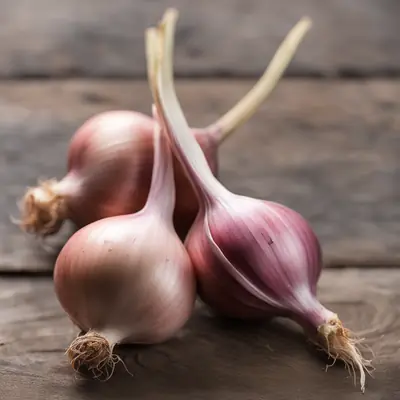
One planted bulb becomes a cluster
Unlike an onion, a single shallot divides into a clump of four to eight bulbs. Space them wider than onions so the cluster has room to develop without crowding itself.
Autumn planting wins
Autumn-planted shallots root before winter and size up substantially better, exactly like garlic. Plant October into November, two inches deep, tip up, and mulch. Spring planting works but expect smaller clusters.
Soil
They want the same loose, well-drained, fertile ground as onions and resent heavy wet clay, which rots sets over winter. Raised beds help considerably on our heavier soils.
Feeding
Side-dress with nitrogen as growth resumes in spring, then stop once bulbs begin to swell. As with onions, late nitrogen gives thick necks and poor keeping.
Problems
The same troubles as onions - white rot, downy mildew, onion maggot - but shallots are generally tougher. The commonest real problem is planting into wet ground in autumn and losing sets to rot over winter.
Harvest
Lift in July when tops yellow and fall, the same signal as onions. Ease the whole cluster up with a fork and separate the bulbs after curing, not before.
Curing and storage
Cure two to three weeks somewhere dry and airy until skins are papery. Well-cured shallots keep six to eight months, notably longer than most onions, which is much of their appeal.
Save your own and cook them
Shallots replant readily from your own crop - set aside the best medium-sized bulbs each year. In the kitchen they are milder and sweeter than onion with a hint of garlic, and they melt rather than staying crunchy, which is why they belong in pan sauces and vinaigrettes.
- Plant
- Oct-Nov or early spring
- Harvest
- Jul
- Spacing
- 6-8 in
- Row spacing
- 12 in
- Sun
- Full
- pH
- 6.0-7.0
- Yield
- 4-8 bulbs per set
- Storage
- 6-8 months