Sweet Corn
Zea mays
Wind-pollinated, so plant it in a block. A single long row pollinates badly and gives gap-toothed ears.
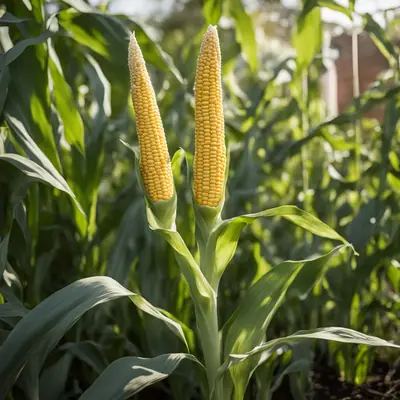
Plant in a block, never a single row
Pollen falls from the tassel at the top onto the silks below, and each silk that fails to catch a grain is a missing kernel. A single long row pollinates badly and gives gap-toothed ears. Four short rows beat one long row every time - a 4x4 block is better than a 16-foot line.
Isolate the sugar types
Standard (su), sugar-enhanced (se) and supersweet (sh2) cross-pollinate and ruin each other's eating quality - starchy, tough kernels. Separate types by at least 250 feet, or by two weeks of planting date so they tassel at different times. Popcorn and field corn must also be isolated from sweet corn.
Warm soil and successive sowings
Sow when soil is 60F for su types, 65F for supersweet, which has weaker seed. For a continuous supply, sow every two weeks or plant early, mid and late varieties together.
A heavy feeder, especially nitrogen
Corn is one of the hungriest garden crops. Work in plenty of compost or manure and side-dress with nitrogen when plants are knee-high and again when tassels appear. Pale, yellowing lower leaves mean it needs more.
Water at tasselling above all
Corn needs the most water from tasselling through kernel fill. Drought at that moment directly costs you kernels and cannot be recovered later. An inch and a half a week during that period.
Suckers and support
Side shoots at the base do no harm and are best left alone - removing them can reduce yield. Hilling soil around the base helps support tall plants against summer storms, and corn also throws brace roots that do the same job.
Pests
Corn earworm is the classic: the moth lays on fresh silks and the caterpillar eats down into the tip. A few drops of mineral oil applied to the silk once it starts to brown suppresses it well organically; otherwise cut off the damaged tip and use the rest. Raccoons are the other major problem and will clear a patch the night before you plan to pick - electric fencing is the only reliable answer. European corn borer tunnels stalks; corn smut produces grotesque grey galls, which are edible as huitlacoche if you are inclined.
Judging ripeness
Ready about three weeks after silks first appear, when they are brown and dry at the tip and the ear feels full and blunt-ended. Peel back a strip of husk and puncture a kernel with a thumbnail - milky juice means ready, clear means too early, doughy means too late.
Harvest and storage
Pick in the cool of the morning by pulling down and twisting. Standard su types begin converting sugar to starch within hours, so cook or freeze the same day; se holds two or three days and sh2 up to a week. Blanch and freeze on or off the cob.
- Days to harvest
- 65-95
- Spacing
- 10-12 in
- Row spacing
- 30-36 in
- Block
- 4+ rows minimum
- Sun
- Full
- pH
- 6.0-6.8
- Soil temp
- 60F+ (su), 65F+ (sh2)
- Water
- Critical at tasselling