Thai Basil
Ocimum basilicum var. thyrsiflora
Purple stems, anise flavour, and it holds up to heat in the pan and in the garden.
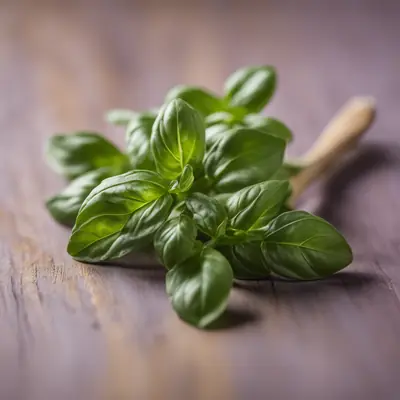
A distinctly different flavour
Thai basil is dominated by anise and licorice notes rather than the sweet clove of Genovese, and it is noticeably spicier. It is not a substitute for Italian basil and vice versa - a pesto made with Thai basil tastes wrong, and a Thai curry with Genovese tastes flat.
It survives cooking
The leaves are smaller, firmer and thicker than Genovese, so they hold their shape and flavour when added to a hot wok or a simmering curry. Sweet basil collapses and turns grey under the same treatment. This is the practical reason to grow it separately.
Better mildew tolerance
Thai basil and other small-leaved types are noticeably less susceptible to basil downy mildew than the large-leaved sweet basils. In a bad mildew year the Thai basil is often still standing when the Genovese has gone.
More heat-tolerant in the garden too
It handles midsummer heat and humidity better than Genovese and keeps producing when the Italian types are struggling.
Same warmth requirements
Still tropical. Out only after nights hold above 55F, in full sun, in warm soil. Cold blackens the leaves.
Let some flower
The purple flower spikes are attractive, edible, and heavily worked by bees. Unlike Genovese, where flowering ruins the flavour quickly, Thai basil holds its quality reasonably well into flowering - so pinching is less urgent, though still worthwhile for leaf production.
Feeding and water
Moderate feeding; heavy nitrogen dilutes the oils. Water at the base in the morning so foliage dries.
Harvest and storage
Cut whole stems above a leaf pair. It keeps a few days standing in water on the counter - never in the fridge. Like all basil it dries poorly; freeze whole leaves or chop into oil. Cuttings root in water within a week.
- Days to harvest
- 60-75
- Spacing
- 10-12 in
- Sun
- Full
- pH
- 6.0-7.0
- Soil temp
- 65F+
- Leaf
- Small, firm, pointed
- Mildew
- More tolerant than Genovese
- Flavour
- Anise, licorice