Tomatoes
Solanum lycopersicum
The determinate versus indeterminate choice decides how you prune, trellis and harvest.
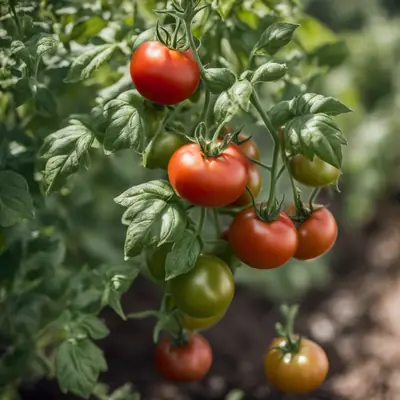
Know which type you have
Determinate varieties grow to a fixed size, set their whole crop over a couple of weeks and then stop - right for canning, wrong for a season of sandwiches. Indeterminate keeps growing and fruiting until frost, reaches six to ten feet, and needs real support and ongoing pruning. This single fact decides your trellis, your pruning and your harvest, and getting it wrong is the commonest tomato mistake.
Do not sucker-prune a determinate
On an indeterminate plant, removing the shoots in the leaf axils below the first flower cluster improves airflow and fruit size. On a determinate plant those suckers carry a large share of the crop, and removing them directly cuts your yield. Check the tag before you start pinching.
Start indoors and plant out warm
Sow six to eight weeks before last frost. Transplant once soil is 60F and nights are settled - a tomato set into cold ground sits still for weeks.
Bury the stem
Tomatoes root along buried stem. Plant transplants deep, up to the first true leaves, for a much stronger and more drought-resistant root system. A leggy transplant can be laid horizontally in a shallow trench with the tip curved upward.
Water evenly
Cracking and blossom end rot both trace back to a dry spell followed by a soaking. Blossom end rot is a calcium delivery failure caused by that inconsistency, not usually a soil calcium shortage - adding calcium to soil that has plenty changes nothing. Mulch heavily and water an inch and a half a week on a schedule rather than on impulse.
Feeding
Compost or a balanced feed at planting, then switch to lower nitrogen and higher potassium once the first fruit sets. Continued high nitrogen gives a magnificent green plant and few tomatoes.
Airflow
Most tomato disease here is fungal and splash-borne. Mulch to stop soil splash, strip the lowest twelve inches of leaves and keep removing them as they yellow, space widely, and water at the base in the morning. Early blight and septoria arrive every humid summer; these habits delay them by weeks.
Read the resistance codes
Letters after a variety name tell you what it resists - V verticillium, F fusarium, N nematodes, T tobacco mosaic, LB late blight, EB early blight. In this climate those letters matter more than almost anything else on the tag, and they are the main practical argument for hybrids over heirlooms.
Heat stops fruit set
Above roughly 90F day or 75F night, pollen goes sterile and flowers drop. Large-fruited types suffer most, which is why you often get an early crop, an August gap, and a September flush. Cherry and small-fruited types keep setting through it.
Pests
Tomato hornworm can defoliate a plant overnight - hand-pick, but leave any hornworm carrying white rice-like cocoons, which are braconid wasps that will kill more. Stink bugs cause pale corky spots under the skin. Aphids and whitefly on the tips.
Harvest and storage
Pick at full colour with slight give, or at the breaker stage when the blossom end first shows colour if birds and cracking are taking a toll - flavour develops off the vine as well as on it. Never refrigerate above 55F if you can avoid it; cold permanently destroys the aroma compounds. Counter, stem down, out of the sun, up to a week. Surplus freezes whole in bags and the skins slip off when thawed.
- Start indoors
- 6-8 wks pre-frost
- Soil temp
- 60F+
- Spacing
- 24-36 in
- Habit
- Determinate / indeterminate
- pH
- 6.2-6.8