Turnip
Brassica rapa subsp. rapa
Two crops in one - the root and the greens - and fast enough to squeeze in anywhere.
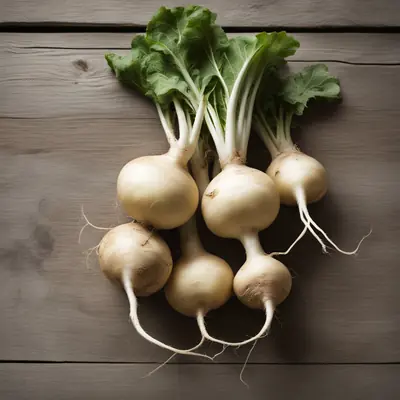
Small and quick
Pull at golf-ball size, two to three inches across. Larger turnips turn woody, pithy and sharp. At thirty-five to fifty days they are among the fastest root crops and slot easily into gaps in a rotation.
Direct sow only
Transplanting disturbs the taproot and produces forked or stunted roots. Sow in place half an inch deep and thin ruthlessly to three or four inches - crowded turnips stay small and misshapen.
Fall crops are much better
Spring turnips race the heat and often turn sharp and woody. An August sowing maturing in cool October weather is sweeter, milder and less troubled by pests, and frost improves it further.
Do not waste the tops
Turnip greens are an excellent cooking green and are ready weeks before the roots. Some varieties are grown specifically for tops. Take a few leaves per plant without stripping it, or grow a separate patch for greens.
Steady water
Irregular watering causes splitting and woodiness. About an inch a week, and mulch helps considerably in a dry spell.
Pests
Flea beetles on seedlings are the main problem - row cover from sowing prevents the shot-holing. Cabbage root maggot tunnels roots in spring plantings, and autumn sowings largely escape it. Rotate away from brassicas.
Harvest and handling
Twist the tops off after pulling, leaving about half an inch, or the leaves will draw moisture out of the root. Wash and cool promptly.
Storage
Keeps a month or two in the fridge or somewhere cold and damp with tops removed. Not a long-term storage crop like rutabaga - eat these first.
- Days to harvest
- 35-60
- Spacing
- 3-4 in
- Row spacing
- 12 in
- Depth
- 1/2 in
- Sun
- Full
- pH
- 6.0-7.0
- Harvest at
- 2-3 in
- Season
- Spring and fall