Yellow Summer Squash
Cucurbita pepo
Pick it small and daily. Two plants will feed a street.
Two plants is genuinely enough
A healthy summer squash produces every day or two through its peak. Most households need one or two plants, not a row. Planting six is the classic first-year mistake.
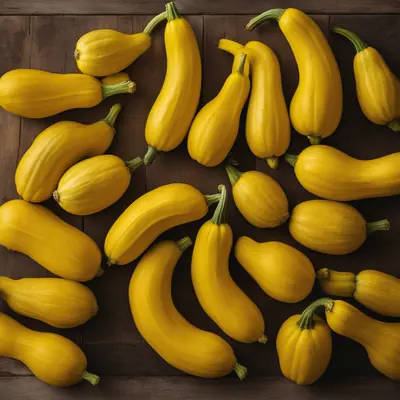
Straightneck and crookneck
Crookneck types have a curved bulbous neck and slightly firmer, nuttier flesh; straightneck are uniform and easier to slice. Both are grown identically. Bush habit means they take a fixed footprint rather than running.
Direct sow into warm soil
Squash germinate fast in 65F+ soil and dislike transplanting. Sow an inch deep after last frost. If starting indoors for an early crop, use peat pots and plant out within three weeks before the roots circle.
Male flowers come first
The first flush of flowers is usually all male, and they fall off without fruiting. This is normal and not a problem - female flowers, recognisable by the tiny fruit behind the bloom, follow a week or so later.
Poor pollination is a real problem
A fruit that starts, then yellows and shrivels at the blossom end, was not adequately pollinated. Squash need multiple bee visits per flower. Avoid insecticides during bloom, plant flowers nearby, or hand-pollinate in the early morning by transferring pollen from a male to a female flower with a brush - it takes seconds and works reliably.
Squash vine borer is the main killer
A clear-winged moth lays at the base of the stem in early summer; the larva tunnels inside and the whole plant wilts suddenly and dies, usually just as it starts producing well. Look for a small hole with sawdust-like frass at the base. Wrap the lower stem in foil or nylon, cover plants with row fabric until flowering, or slit the stem lengthwise with a knife, remove the grub, and bury that section to re-root. A second sowing in early July usually escapes the main flight entirely and is the simplest insurance.
Squash bugs and cucumber beetles
Squash bugs suck sap and cause wilting; look for bronze egg clusters on leaf undersides and crush them - adults are hard to kill once established. Cucumber beetles transmit bacterial wilt, which causes irreversible collapse.
Powdery mildew
White powder on leaves from midsummer, effectively ending the plant's productive life. Space widely, water at the base, choose resistant varieties, and start a second planting in July to carry you to frost.
Harvest daily
Pick at six to eight inches, when the skin is glossy and a thumbnail marks it easily. Larger fruit turns seedy and watery and, more importantly, signals the plant to stop producing. Cut with a knife leaving an inch of stem; twisting damages the crown. Wear sleeves - the stems and leaves are prickly.
Storage
Under a week refrigerated. It does not freeze well raw and turns to water; grate and freeze for baking, or make it into soup or fritters.
- Days to harvest
- 45-55
- Spacing
- 24-36 in
- Row spacing
- 4-5 ft
- Sun
- Full
- pH
- 6.0-6.8
- Soil temp
- 65F+
- Pick at
- 6-8 in
- Plants needed
- 1-2 is plenty