Red Mulberry
Morus rubra
The native mulberry of this river valley, and one of the highest-value wildlife trees you can plant.
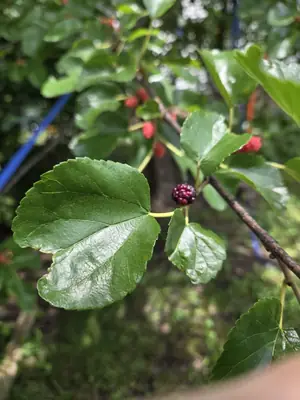
Give it room
This is a full-size shade tree, not a patio fruit. Thirty-five to fifty feet, with a wide spreading crown. Site it once and site it correctly - it has a deep root system and does not transplant well once established.
Where not to plant it
The fruit stains concrete, cars and decking, and birds spread it further in a form that stains worse. Keep it well away from driveways, patios, walkways and anything you park on. The right place is the back of a property, over grass or a wild edge.
Soil and light
Prefers moist, deep, well-drained bottomland soil - it grows naturally along rivers and in floodplain woods here. It tolerates part shade better than most fruit trees, though full sun gives the heaviest crops. Water through dry spells for the first few years.
Pollination
Red mulberry is usually dioecious, with male and female trees, though monoecious individuals occur. Seedling trees do not reveal their sex for several years. If fruit is the point, buy a named female cultivar or plant several seedlings and accept some will be male.
Pruning
Prune in late winter while fully dormant - mulberries bleed sap heavily if cut in spring or summer. Remove dead, crossing and low branches to build a clear trunk. Keeping the tree lower by heading it back makes harvest and netting far more practical, and it responds well to that.
Fruiting and yield
Fruit from year three to five on grafted stock, longer from seed. A mature tree produces an enormous quantity over three to four weeks in early summer - far more than a household can eat, which is part of why birds are welcome to a share.
Harvest
Ripe fruit drops at a touch, and it does not ripen after picking. The traditional method is a sheet or tarp spread under the tree and a gentle shake, because picking by hand is slow and the ripe ones fall anyway. Pick over the tree every day or two during the season. Unripe fruit and the milky sap can cause stomach upset.
Pests and disease
Remarkably trouble-free. Popcorn disease occasionally swells individual drupelets; remove and destroy affected fruit. Spotted wing drosophila affects late fruit. The main practical problem is birds, and netting a fifty-foot tree is not realistic - plan to share.
Native value
Morus rubra supports a long list of birds and insects and is a genuine wildlife asset. If your reason for planting is ecological, this is the one to plant, not the white mulberry - and planting red near existing white risks hybridisation, which is one of the main threats to the native species.
Storage
Extremely perishable - a day or two at most, and they crush easily. Freeze on a tray then bag, or make jam, cordial or wine. They also dry well.
- Hardiness
- Zone 4-8
- Mature size
- 35-50 ft
- Native
- Eastern N. America
- Fruits
- Year 3-5
- Light
- Full sun to part shade
- Soil
- Moist, well drained
We sell this one.
See it in the shop